
How Finance Masters Pick Quant Research Topics
Under the pressure of thesis writing, selecting a topic that balances practical value with personal interest is crucial. For students in finance or econometrics, quantitative trading is a strategic choice that leverages their expertise while supporting future career development.
This is Part 1, focusing on how to define your research topic.
How to Define Your Research Topic?
The hardest part of a thesis is defining the research direction and topic. In scientific research, asking the right question is half the solution—Aristotle.
As masters of thought have noted, sometimes the question itself is more important than the answer. Legend has it that someone once advised Hilbert to solve Fermat’s Last Theorem, to which Hilbert smiled and replied, “Why would I kill a goose that lays golden eggs?” In Hilbert’s view, a mathematical problem like Ferm’s Last Theorem was invaluable to mathematics.
 Tomb of David Hilbert, by Kassandro - Own work, CC BY-SA 3.0
If you are fortunate enough to study under a renowned advisor, defining your research direction and topic becomes easier, as they often possess a wealth of problems, each a treasure trove. If you lack such conditions, here are some suggestions.
Understand the Industry’s Historical Development
Defining a research topic begins with understanding the industry’s historical development. In quantitative trading, there are roughly three main threads.
First is asset pricing research. Starting from the 1950s with Markowitz and his student William Sharpe, and developed by Stephen Ross, Fama, and others, this thread formed the theoretical framework for factor investing and portfolio management. It is also a major source of Nobel Prizes in Economics.
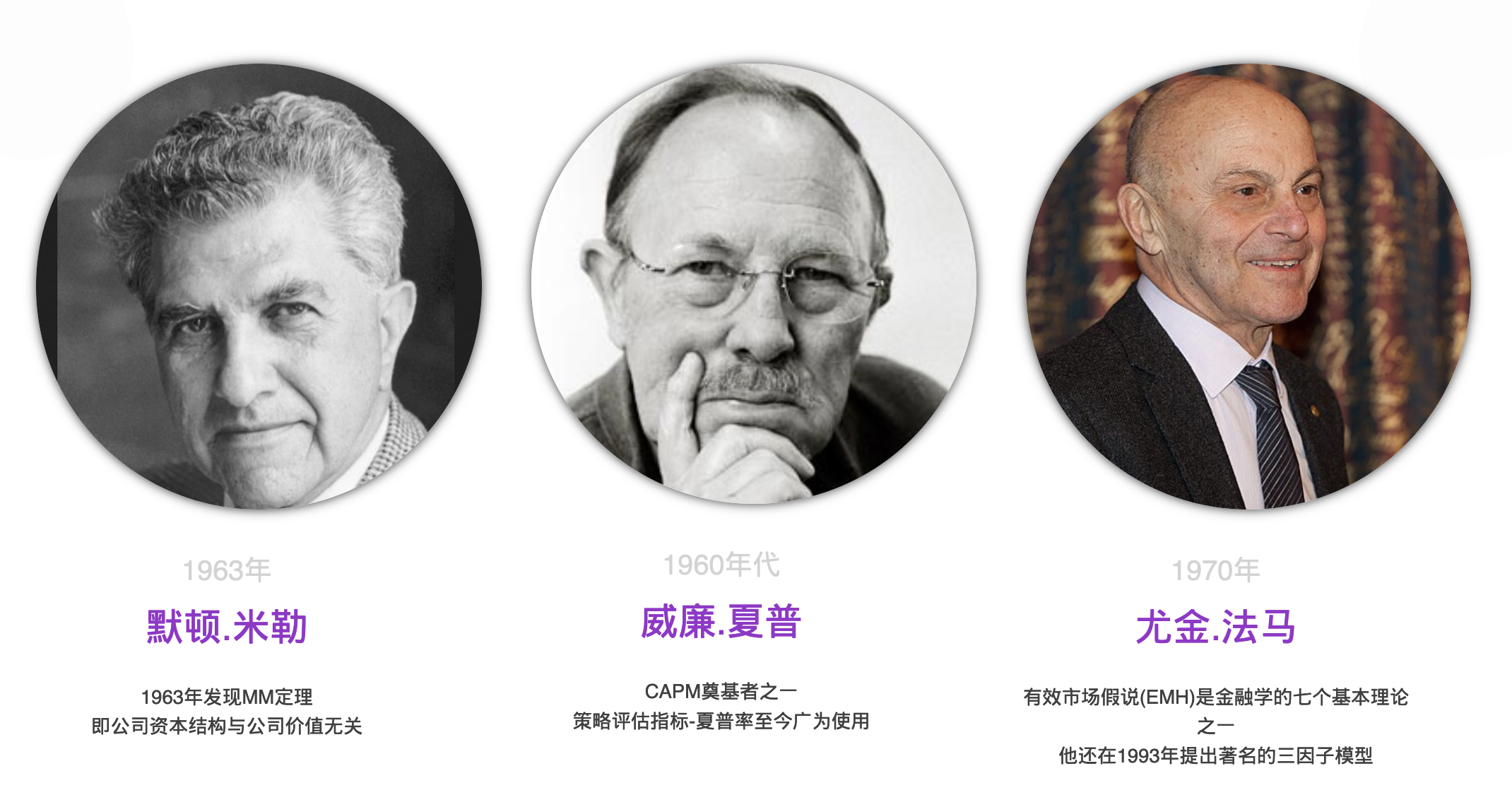
Second is derivatives and option pricing research. Pioneered by Louis Bachelier starting in 1900, and developed by Itô Kiyoshi, Fischer Black, and Myron Scholes, this field reached its peak with the proposal of the option pricing formula—the BS formula.
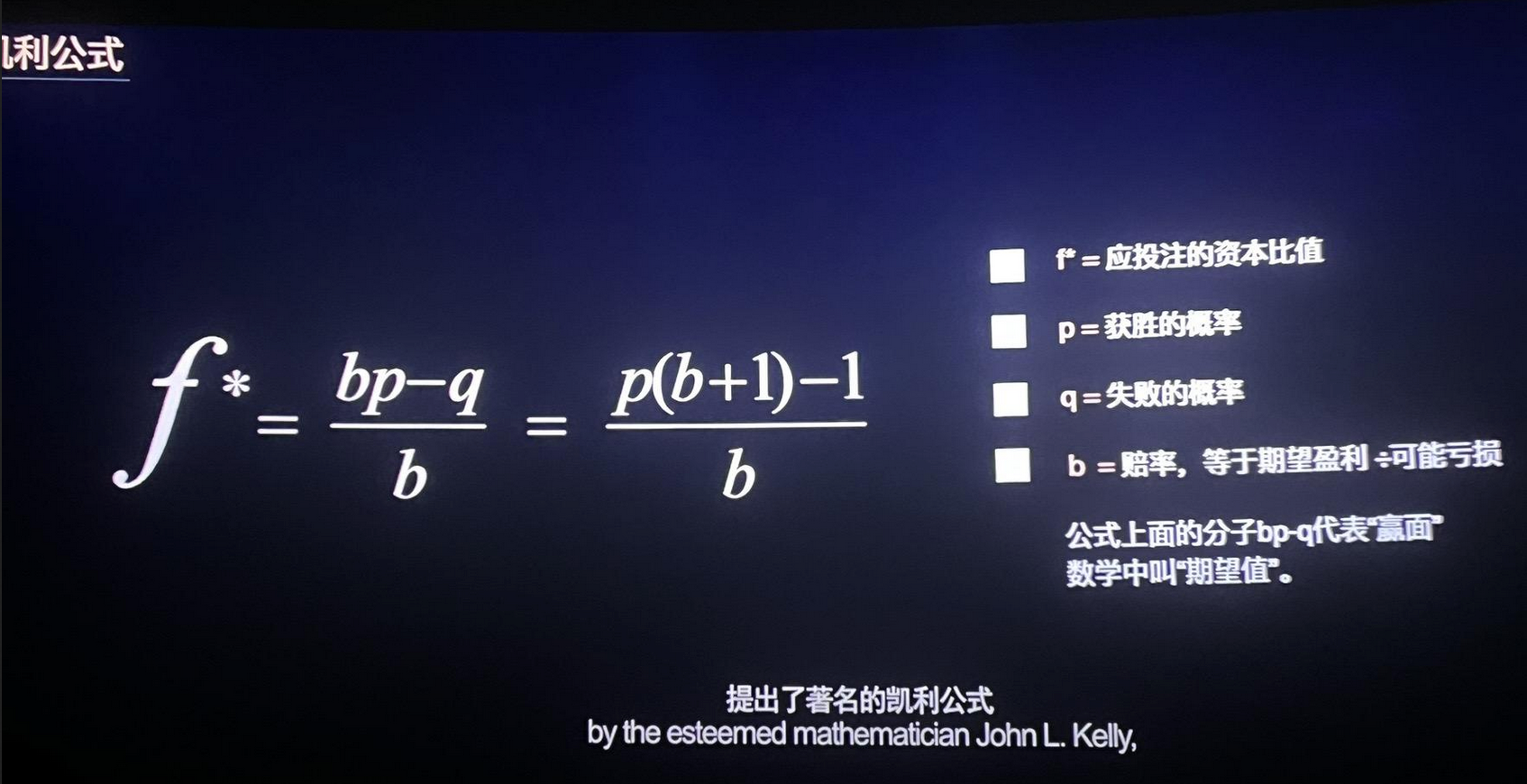
Third is the technical analysis school. This school is application-driven and lacks its own theoretical system, often adopting ideas from other fields. For example, Claude Shannon, the father of information theory, contributed the grid trading method. His colleague at Bell Labs, John Kelly, discovered the Kelly Criterion, which was later used by another colleague, Edward Thorp, in casinos and the stock market.
Disciplines such as information theory, statistics, and digital signal processing have been applied to trading, forming a significant branch of quantitative trading. The most famous quantitative fund, Renaissance Technologies, initially hired the entire team from IBM’s ViaVoice lab, primarily valuing their digital signal processing capabilities.
We have now entered the era of machine learning. Research on building trading models and strategies using machine learning and reinforcement learning is burgeoning. If past finance required复合 talents in mathematics and finance, quantitative research now demands more computer science and AI expertise. This is a golden track for publishing papers.
Completely understanding these directions through personal reading alone is difficult. We can start with some bestsellers, then read important papers published in top journals, allowing us to quickly grasp the industry’s overview.
Bestsellers
Although bestsellers are less specialized, they are excellent for grasping research directions and understanding industry development, combining knowledge with entertainment. Because they are less tiring to read, they are suitable for beginners.
These bestsellers are helpful in establishing your own perspective on industry history:

- Inside the Black Box of Quantitative Trading by Rishi K. Narang. This book is considered one of the best introductory texts for systematic quantitative trading.
- Quant Life: The Number Masters of Wall Street. This book introduces the secrets behind the success of famous investors like Simons and Edward Thorp.
- The High-Frequency Trader: The Speed Game on Wall Street. This book introduces the mysterious world of high-frequency trading. After reading it, you can drop your obsession with HFT, as it is an arms race, and there is little opportunity for new entrants now.
- Pricing the Future: The Quantitative Financial History That Shook Wall Street. This book introduces the history of option pricing theory. Here is a review from a Douban user:
quote
It gets better from Chapter 6. Why doesn’t anyone teach my university courses this way? It integrates character gossip, their achievements, and the gradual intellectual evolution, confrontation, and inheritance across generations... This writing style highlights the importance of literature retrieval. Without these elements, how can one see the collision of intellects?Numerous terms and theorems in textbooks become vivid characters. This storytelling method is so lively and interesting. Riemann integration, Itô’s formula, Markov processes, David Hilbert’s problems, and the option pricing formula...
Now, you should have a general overview of the industry, roughly knowing what knowledge reserves are needed for which research direction, what the future prospects are, and whether you are interested. Next, you need to dig deeper and start contacting some professional papers.
Key Papers
Here are some key papers. You can decide which ones to read based on your direction.
- Portfolio Selection, Markowitz, 1952. In this article, Markowitz proposed Modern Portfolio Theory (MPT), earning him the 1990 Nobel Prize in Economics. The paper extended the common risk-return trade-off by incorporating the correlation between risk and return into calculations.
- A New Interpretation of Information Rate, Kelly, 1956. This article is the formal statement of the famous Kelly Criterion. The model is widely used in casino games, especially risk management. The author derived a formula that determines the optimal allocation size to maximize wealth growth over time.
- Capital Asset Prices: A Theory of Market Equilibrium under Conditions of Risk (Sharpe, 1964). Based on Markowitz’s work, CAPM proved that there is only one efficient portfolio, the market portfolio. This article proposed the famous Beta concept. Sharpe and Markowitz were teacher and student, winning the Nobel Prize in Economics in the same year.
- Efficient Capital Markets: a Review of Theory and Empirical Work, Fama, 1970. This paper is the pioneering work that first proposed the very popular “Efficient Market Hypothesis” concept. Although this theory is now heavily questioned, its academic value remains high.
- The Pricing of Options and Corporate Liabilities, 1973, Black & Scholes. The famous BS formula uses the physical heat transfer equation as the starting point for estimating option prices. This is also why hedge funds like physics students.
- Does the Stock Market Overreact?, 1985, Bondt & Thaler. This article questions the Efficient Market Hypothesis. Bondt and Thaler propose that there is statistically significant evidence to the contrary: investors often overreact to unexpected news events. This is also a classic study in behavioral finance. Behavioral finance has been a hot topic for Nobel Prizes in recent years. Its underlying philosophy is subjective value theory and human-centric thinking. Thaler is also a Nobel laureate and played himself in the movie The Big Short.
- A closed-form GARCH option valuation model, 1997, Heston & Nandi. This paper proposes a closed-form formula for evaluating spot assets and uses the Generalized Autoregressive Conditional Heteroskedasticity (GARCH) model to model its variance. Due to its complexity and practicality, the GARCH model was widely popular in the 1990s for estimating volatility, and the financial industry actively adopted them.
- Optimal Execution of Portfolio Transactions, 2000, Almgren & Chriss. For every quantitative developer responsible for refining trade execution algorithms, this paper is an essential academic literature. The article points out that price volatility comes from exogenous factors (market volatility) and endogenous factors (the impact of one’s own orders on the market). This is a quantum effect! The authors formalized a method for executing and measuring trade execution performance by minimizing a combination of transaction costs and volatility risk.
- Incorporating Signals into Optimal Trading, 2017, Lehalle. Very similar to the work of Almgren and Chris (2000), this paper discusses optimal trade execution. The author further refined the work done in this field by incorporating Markov signals into the optimal trading framework and derived optimal trading strategies for the special case of assets with drift (Ornstein-Uhlenbeck process).
If your research direction is factor investing or machine learning, there are more papers focused on these directions to read. These papers are introduced in our courses; there are too many to list here, so only a few are introduced:
- The Performance of Mutual Funds in the Period 1945-1964, Michael Jensen. Sharpe proposed the concept of Beta in his article, while the concept of Alpha was proposed by Jensen in this paper.
- Common risk factors in the returns on stocks and bonds, 1993, Eugene F. Fama. In this article, Fama proposed the three-factor model.
- Review of Financial Studies, 2017, Stambaugh, Yuan. This paper appeared later, so it can review important papers that appeared earlier related to factor investing, thus becoming an important paper for us to quickly understand the industry. Although published later, it has already been cited 952 times.
- 151 Trading Strategies, 2018, Zura Kakushadze. The author is from WorldQuant and is one of the authors of Alpha101. This paper cites a large number of papers (2000+), making it good material for general reading.
Each paper cross-references other papers and materials. Therefore, after reading these materials, we should have a relatively comprehensive knowledge understanding of the past of our areas of interest; next, we need to read some frontier materials to understand future developments.
However, this is difficult because of the huge number of papers published each year, making it impossible to read them all. How do we know which papers are the most important? This part will be discussed in the next article.
Finding a Topic
After having a relatively in-depth understanding of the history of related fields, you may have discovered some unresolved problems; they might appear in the final sections of the papers you have read. But what if you still haven’t found a suitable problem?
Writing a thesis is actually an innovative process. After all, if our thesis has no new ideas, it cannot be a good thesis.
Innovation is traceable. If you have read the bestsellers mentioned earlier, you should be able to find some clues.
Cross-boundary and Marriage
Cross-boundary integration and marriage are the easiest ways to achieve innovation.
The BS formula was partially derived from the heat conduction equation in physics; Edward Thorp applied the Kelly Criterion to casinos and stocks, achieving great success—a theory originally built to study noise in long-distance telephone lines. Many signal processing techniques used in communications became quantitative algorithms; Markowitz was among the first to apply statistics to finance (this statement might not be entirely correct; for many, Paul Samuelson was the pioneer. However, this mainly depends on how one distinguishes finance from economics), winning the Nobel Prize solely based on mean-variance theory. The genetic algorithms widely used in quantitative trading today are obviously inspired by some basic principles of biology.

Now, many people have some knowledge reserves in machine learning and neural networks. If you cannot think of other directions for marriage, you can try linking AI with finance and attempting new directions such as cryptocurrencies.
Chasing New Trends and Technologies
In some old directions, it may be easier to obtain materials and build a knowledge system, but innovation in these directions will be more difficult.
It is recommended to find some new concepts as much as possible. Although cryptocurrencies have appeared for nearly 20 years, they remain the hottest topic and the latest direction in the financial field.
In terms of technology, large models and reinforcement learning are clearly new directions in AI that can be grafted onto the financial field.
Seeking Guidance from Industry Veterans
Finding new directions independently through the previous two suggestions may be quite difficult for many people. After all, at the graduate stage, understanding of industry development is not deep, and the knowledge base is narrow. To find new problems, you can seek help from industry professionals.
Even if industry professionals cannot solve problems themselves, they are definitely the first to raise problems. In fact, in exploring new topics, universities are often not as leading as the industry. For example, the development of computer graphics was not due to academic planning but was played out by a group of people who wanted to play games, which later drove the vigorous development of artificial intelligence. The same applies to the quantitative field.
So the question arises: how can an ordinary graduate student get guidance from veterans? Before this question, there is another one: where to find these veterans? The following introduces a small tip.
There is a Six Degrees of Separation theory, which means that between you and any person on this earth, there are at most five people in between. To find a specific person, you need to find the right node.
 by C-C@sgpjbg.com
In this era, knowledge bloggers are very good nodes. Taking my own Xiaohongshu (Little Red Book) as an example, I once interpreted a paper by a well-known foreign scholar, and in the comments section of the note, I met his student. So, if someone wants to find this scholar, they might find his student through my notes and then contact him. For example, in my courses, according to incomplete statistics (some students are unwilling to share their identities, and we won’t ask much), there are four or five private equity (including fund) bosses (some signed up for their company employees’ training). So, in my group, I can connect with industry professionals.
This is just an example using myself. Let’s summarize the method: based on the direction you want to research, search by tags to find all knowledge bloggers in this direction, quickly go through the content they publish, and match it with the knowledge system you have established earlier. If the overlap of concepts (keywords) is high, follow this blogger and try to join their group.
This is the first step. Now, you are likely in the same group as the person you want to know, able to speak in public, but unable to further contact them because the generation gap between you is too large.
Here, I do not recommend so-called “upward socializing”; I recommend “value exchange” and equal socializing.
I know a classmate who exchanged value with others by helping a big shot manage his official account, mainly for typesetting and proofreading. While doing this work, she naturally had the opportunity to ask the big shot questions and receive guidance. This is value exchange, a healthy social method.
What if there are no big shots in the group, or you don’t know them? Then start with value exchange with people you can help. Once you know them, you can meet higher-level people through them.
Let’s go back to the node of knowledge bloggers. Knowledge bloggers need traffic, which is where we can help them. I have a broker friend who helped me like and repost every day for over two months. I hadn’t had the chance to help him yet, but unexpectedly, he resigned. But I have always been grateful to him; if he has any requests that I can help with, I will definitely help.
Once you become friends with the blogger, asking for some requests will definitely be helped by him.
This process cannot be rushed; building links between people takes time. But if you are a knowledge-seeking person, you should be able to enjoy this process well.
In today’s article, I introduced some of the most important papers in the quantitative direction. In the next article, I will introduce the resources and tools I usually use.