
Bypass Paywalls: Free WSJ & Bloomberg Access for Quants
How to Access Free Wall Street Journal Articles
Course students often ask us where we source the high-quality articles and insights featured in our curriculum.
Many students realize the importance of high-quality financial information as they progress in learning quantitative strategies, only to be deterred by the subscription costs.
Annual subscription fees for mainstream financial media:
| Media | Annual Fee (USD) | Notes |
|---|---|---|
| Wall Street Journal (WSJ) | ~$238/year | Renewal price; first-year discount ~$52 |
| Financial Times (FT) | ~$299-$540/year | Standard digital $299; Premium $900/year |
| Barron's | ~$195-$260/year | Digital $195; Print +$65 |
| Bloomberg | ~$600+/year | Digital only |
To be honest, subscribing to just two of these outlets costs hundreds or even thousands of dollars annually. For most individual learners, this is indeed a significant expense.
However, I have gradually realized that cost is the secondary issue; the lack of a reading framework is the more fundamental problem.
Even if you spend money and subscribe to numerous sites, without a structured approach and filtering mechanism, you are likely to consume a pile of fragmented information without deriving any actionable insights.
Therefore, I will first discuss the methodology, followed by the free access tools. If you only want the free tool, skip to Part 3; if you wish to understand the rationale behind this reading approach, I recommend reading on.
I. What Financial Professionals Should Read
The core question in financial reading is not about finding free entry points, but clarifying: Are you reading to acquire information, or to form judgments?
Many assume these two objectives are similar, but they are vastly different:
| Acquiring Information | Forming Judgments | |
|---|---|---|
| Answers | What happened today? | Which layer of analysis should this be viewed through? |
| Key Focus | Knowing is sufficient | Which claims warrant skepticism? |
Many people consume vast amounts of news, briefings, and long-form articles, yet remain easily swayed by the market—not due to a lack of diligence, but because they default to the belief that "consuming more" naturally leads to "thinking clearly."
The Unique Nature of Financial Information
Financial information differs from general news because it does not wait quietly for your understanding. It is immediately interpreted, disseminated, and priced by the market.
By the time you see it, facts, expectations, interpretations, and price reactions are often intertwined. What you read is usually not the raw event, but its publicly processed version.
Thus, the greatest danger in financial reading is not a lack of information, but explanations arriving too early. Once an explanation precedes your own analysis, you may mistake borrowing someone else’s narrative for genuine understanding.
The Three-Layer Framework
I decompose financial information into three layers:
| Layer | Core Question |
|---|---|
| Event Layer | What happened? |
| Fact Layer | What are the underlying facts? |
| Interpretation Layer | What does this imply? |
While these layers may seem like a simple sequence, they correspond to three distinct cognitive tasks. Disrupting this order disrupts subsequent judgments.
Layer 1: Locate the Event First
Reviewing the news layer is essentially about establishing an event coordinate. The task is not depth, but awareness: knowing what the market is discussing, distinguishing noise from signal, and identifying which issues dominate attention.
Whether macro data exceeded expectations, the Fed issued new statements, or a company released earnings, these belong to the Event Layer.
The value of this layer lies not in depth, but in speed. Some content is not unimportant, but its timing is irrelevant. By knowing where the market’s attention is focused, you can determine what warrants further investigation.
However, stopping here is insufficient. News excels at telling you "what happened" but fails to define "the boundaries of the event."
If one remains solely at the news layer, they may feel highly engaged but lack true comprehension.
Layer 2: Return to Facts
The second layer must return to primary sources because it addresses not "what the market is arguing about," but "what facts the event rests upon."
True depth of understanding usually stems not from secondary headlines, but from announcements, earnings reports, earnings calls, regulatory filings, and macroeconomic databases.
The primary value of these materials is not to provide a ready-made conclusion, but to return the foundation of judgment to you: What are the numbers? What are the definitions? What are the constraints? What is the time horizon?
The greatest risk in financial judgment is losing boundaries. Without boundaries, even elegant analysis can become detached from reality. Many suffer here: becoming familiar with conclusions while growing unfamiliar with the evidence.
Layer 3: Review Interpretations Last
Once the event is located and facts are confirmed, analysis comes last. The value of the Interpretation Layer is not to provide answers, but to organize already-occurred events and confirmed facts into a causal structure.
This is why analysis is most useful when viewed late, not early. Only after the first two layers are solid can you compare frameworks rather than passively accepting them.
You learn to distinguish whether an analysis explains facts or caters to emotions; whether it builds logic or rationalizes ex post facto.
What the Reading Framework Truly Solves
Financial reading is harder than general reading because you must read not only the information itself but also the market’s reaction to it.
For example, after a company releases earnings, the numbers may look good, and common sense suggests the stock price should rise, yet it falls. Often, this is not because the earnings were poor, but because the market had higher expectations.
Market reactions often reflect not "absolute good or bad," but "whether performance exceeded or fell short of relative expectations."
Deep reading in finance does not mean mastering more jargon; it means learning to distinguish four things: what has already happened, what is the consensus already accepted by the market, what is the current point of disagreement, and what is the change not yet fully recognized.
Once financial reading achieves this distinction, even with limited entry points, the content will gradually form a coherent system.
II. Where to Find Articles
Next, we address the practical question: Given the reading sequence, how can ordinary users effectively integrate these entry points for free?
Browse These Websites in Order
Following the framework above, the sequence is:
- Reuters / Bloomberg / Caixin: First, identify what happened today—macro events and market dynamics.
- Financial Times / Barron's / Business Insider: Next, examine the numerical implications—valuations, price movements, and comparisons.
- Central Bank Websites / arXiv / SSRN: Finally, dig into deeper logic—policy reports and academic research.
Scanning through these in order daily is sufficient.
III. How to Access These Articles for Free
This section focuses on a browser extension that bypasses the paywalls of most mainstream financial media, along with step-by-step instructions.
Step 1: Understand the Tool
Most mainstream financial media have paywalls, blocking direct access. This extension helps bypass the paywalls of most well-known sites, allowing direct content reading: bypass-paywalls-chrome-clean (Note: Using this extension requires a VPN/proxy).
This open-source project, developed by Russian developer magnolia1234 on GitHub, has been continuously updated for over a year, with the latest version released in mid-February 2026. There is no need to worry about it becoming obsolete.
Project webpage: https://gitflic.ru/ (Requires VPN)
Step 2: Install the Extension in Firefox
The following steps use Firefox as an example. The macOS page can be directly translated into Simplified Chinese. Google Chrome can also install this extension.
Open Firefox and visit
http://gitflic.ru/. macOS has built-in translation; click the middle button.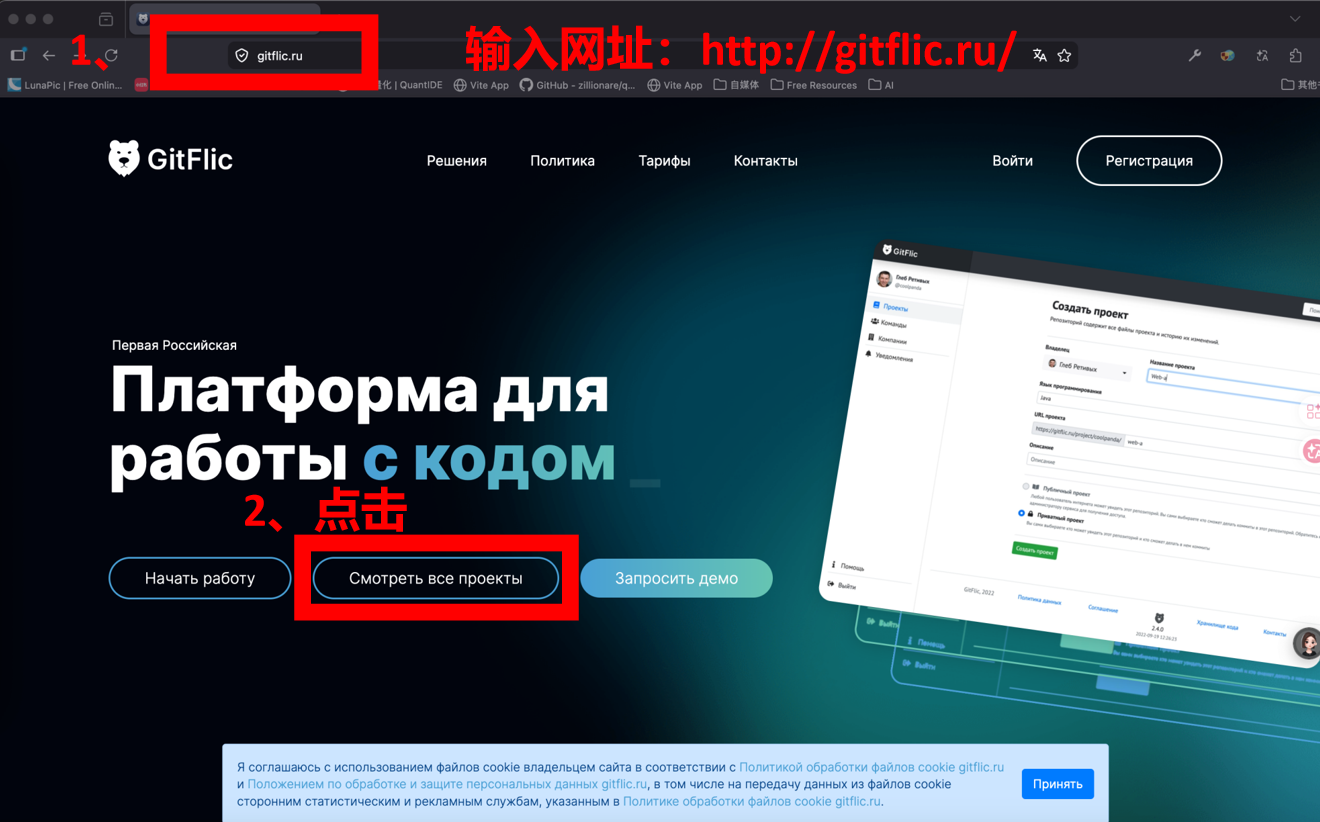
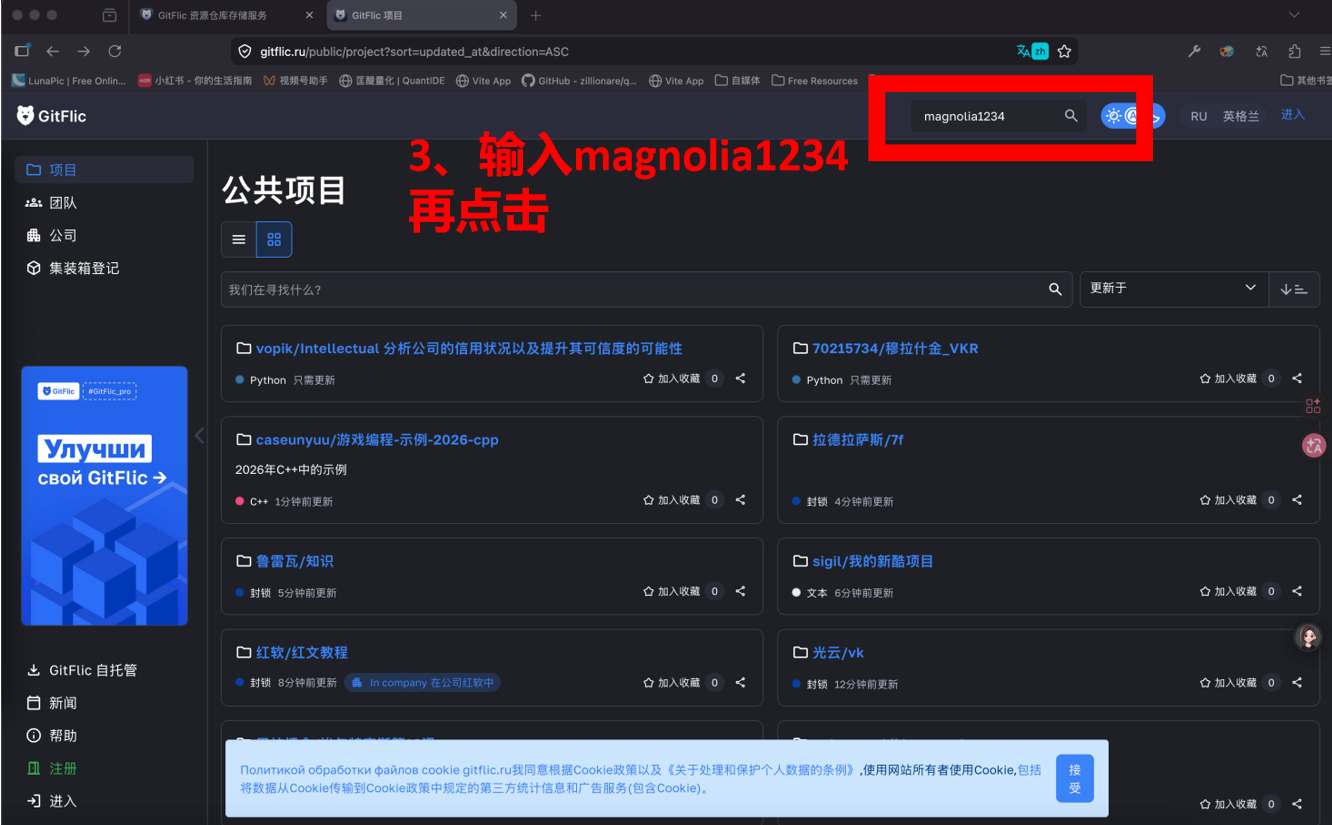
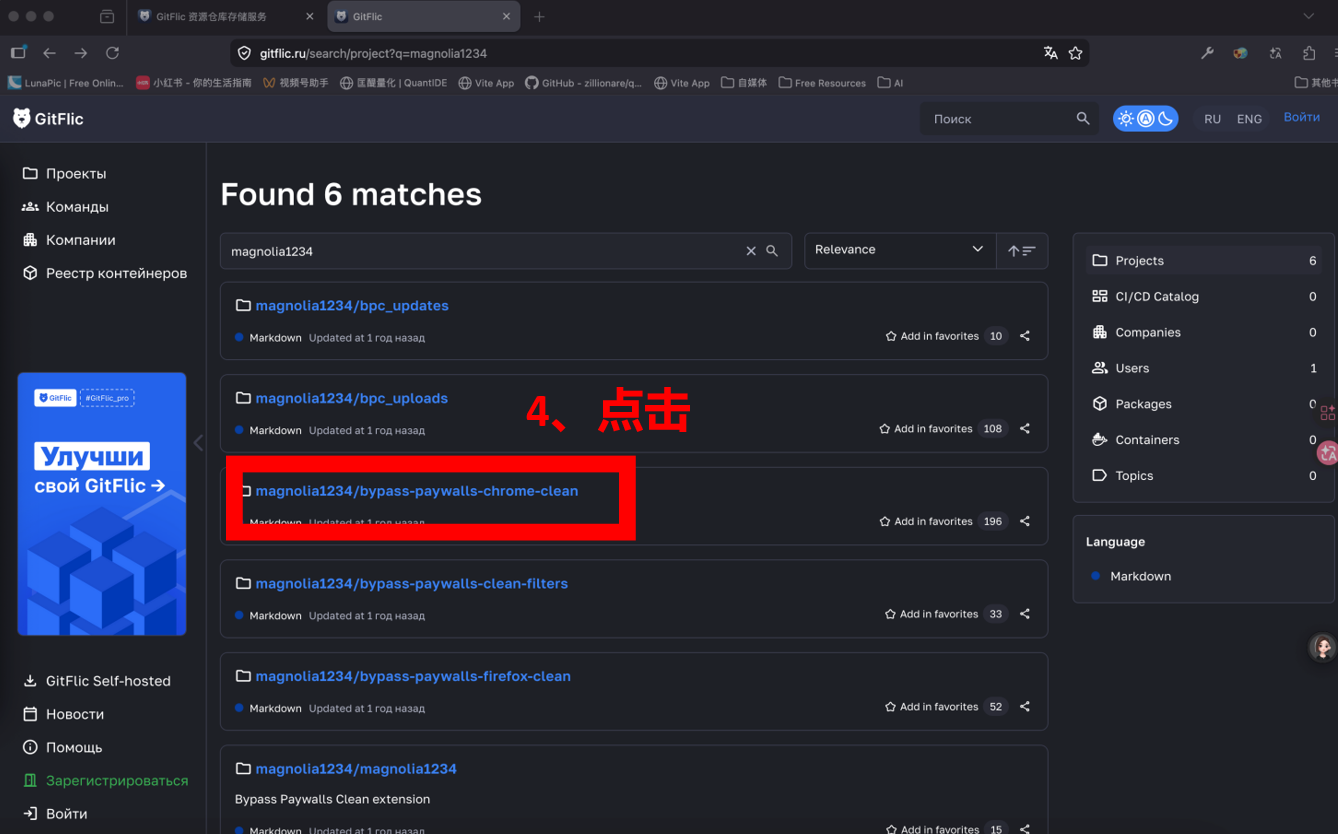
Search for magnolia1234 in the top right corner and open the third document (magnolia1234/bypass-paywalls-chrome-clean).
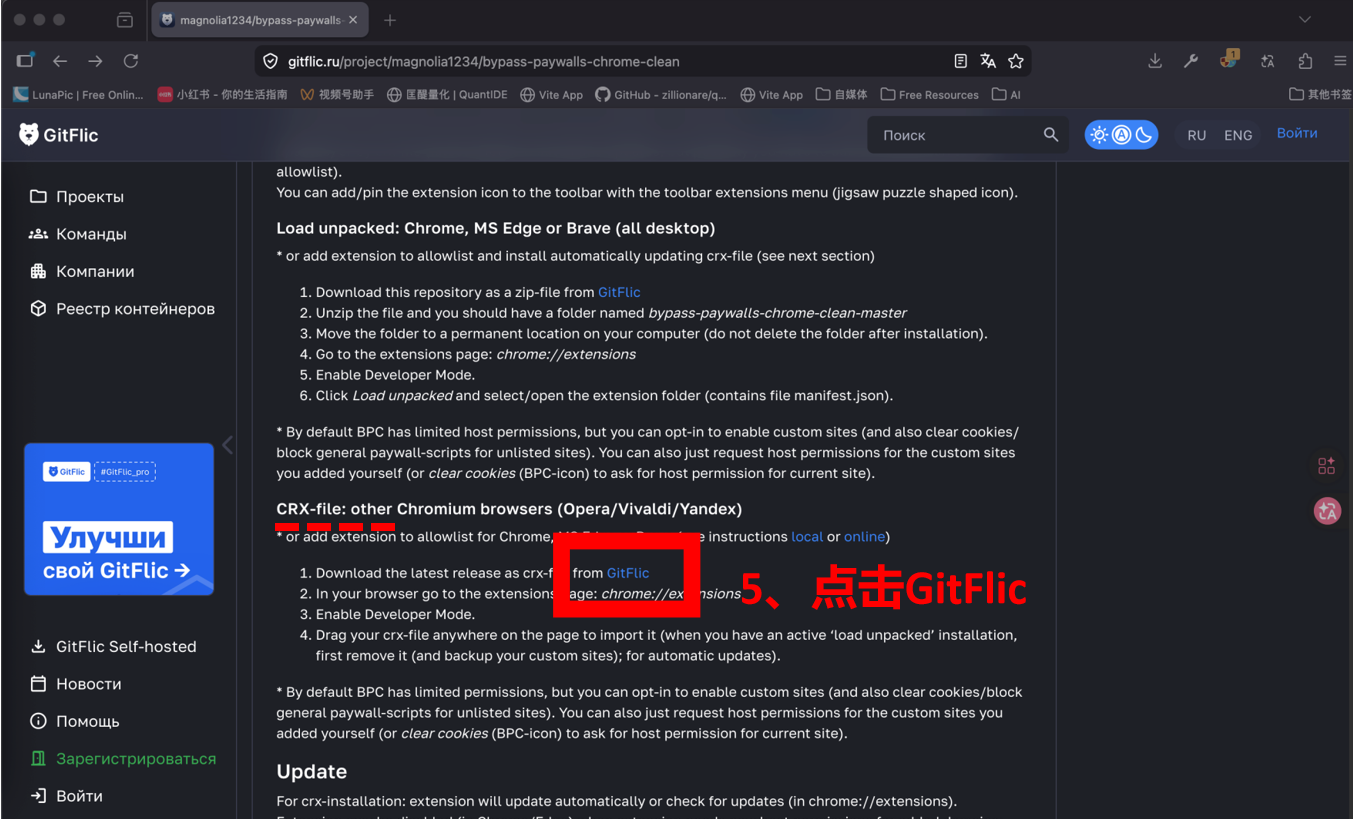
Locate CRX-file (!!! Do not confuse it with other files), click to download from GitFlic. This is the extension installation package, which can be directly dragged into the extensions page for installation.
Click Code in the top right corner, then select ZIP & Download.
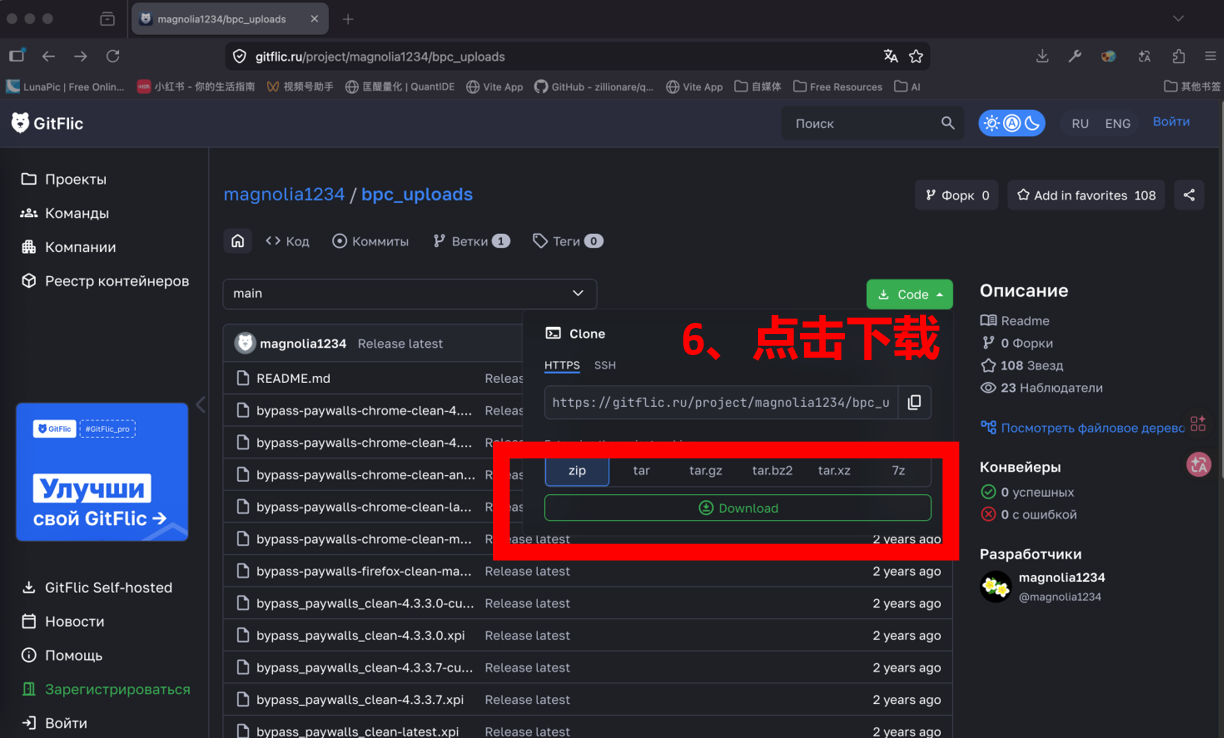
After unzipping, you will get the folder
bypass_paywalls_clean-4.x.x-custom.xpi. This is the Firefox-specific installation file; do not drag it in yet.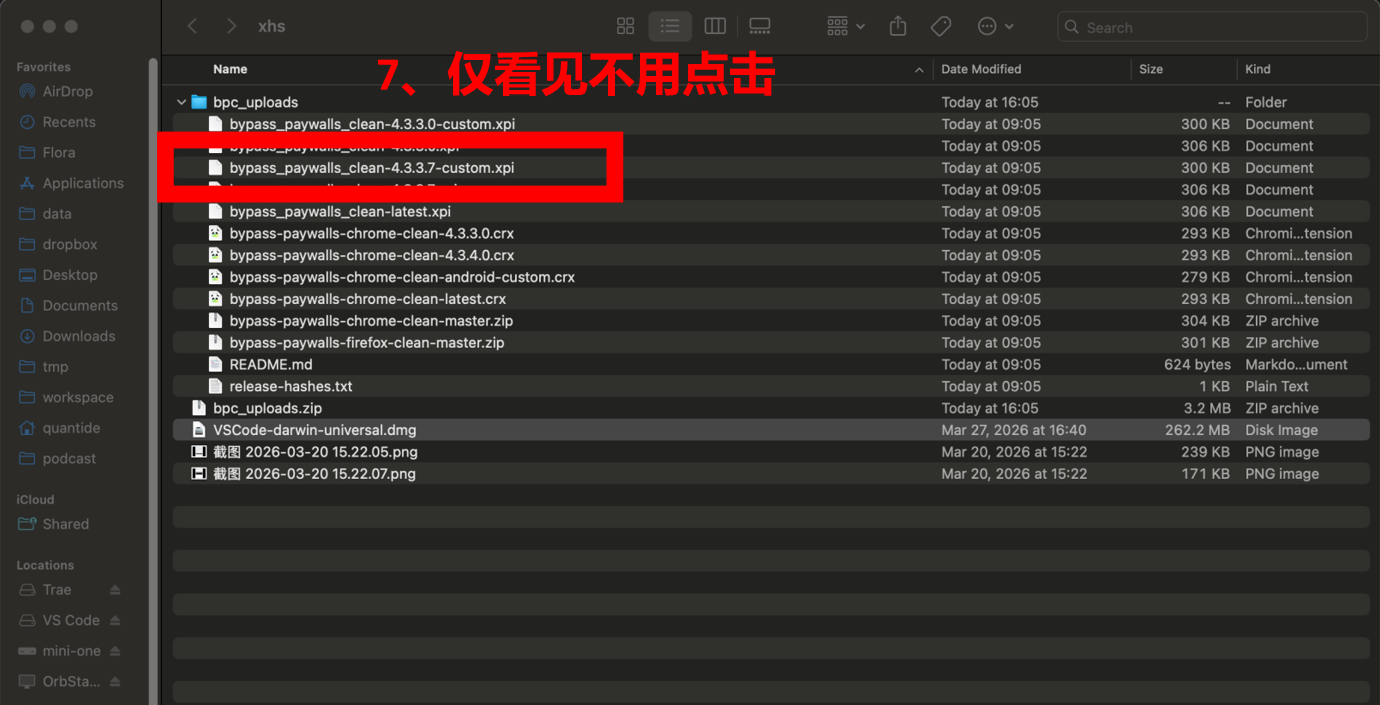
Open a new Firefox window, click the top-right menu → Extensions and Themes, and drag the
.xpifile from the previous step into it. Select "Allow" in the top right corner.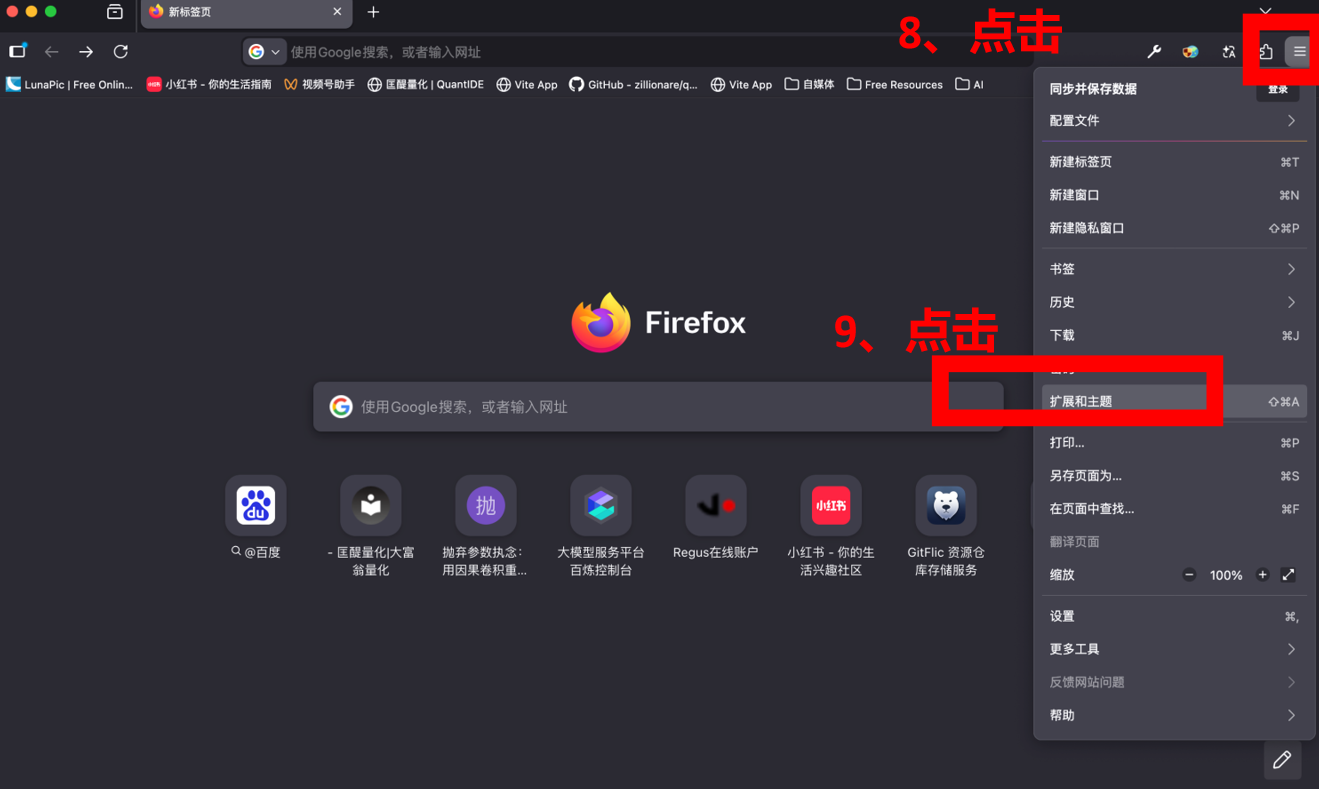
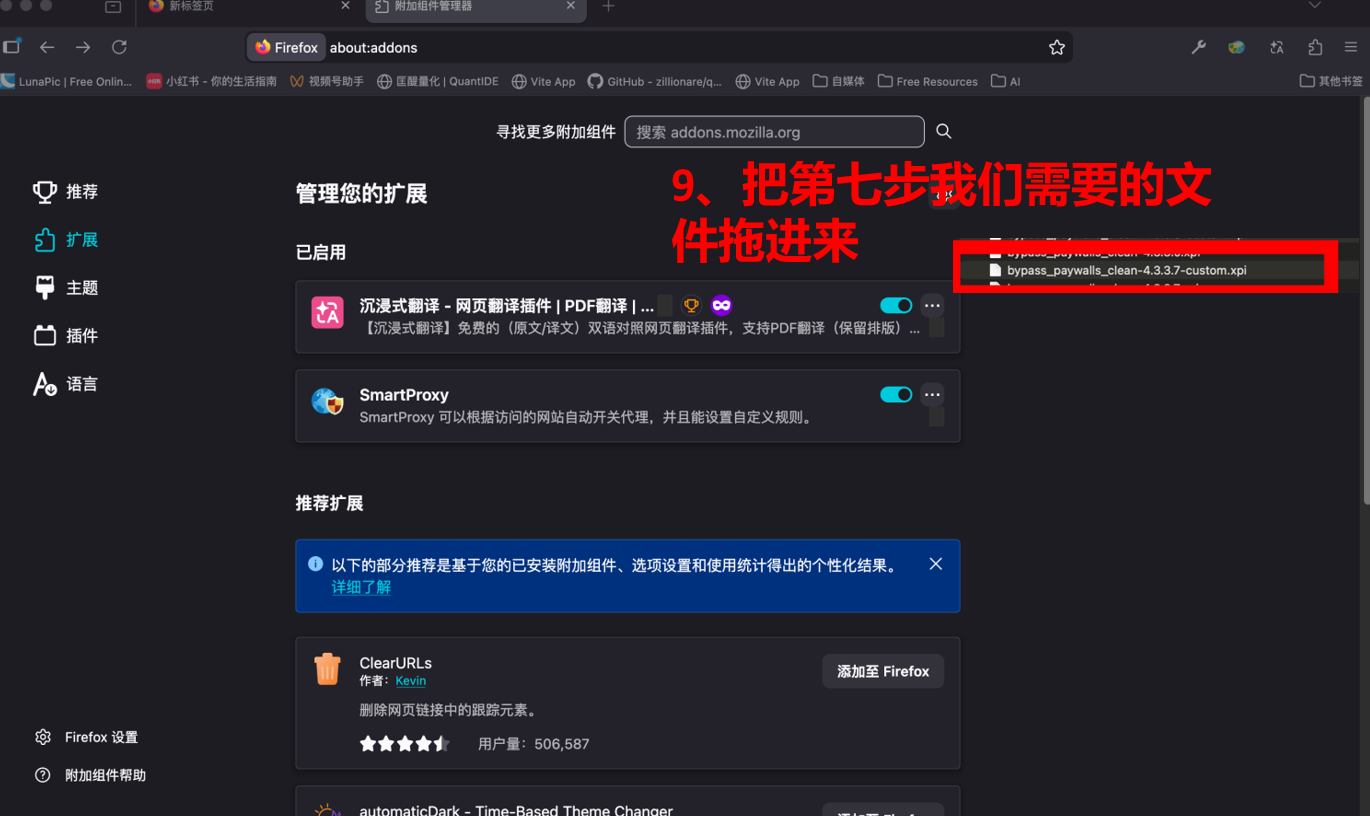
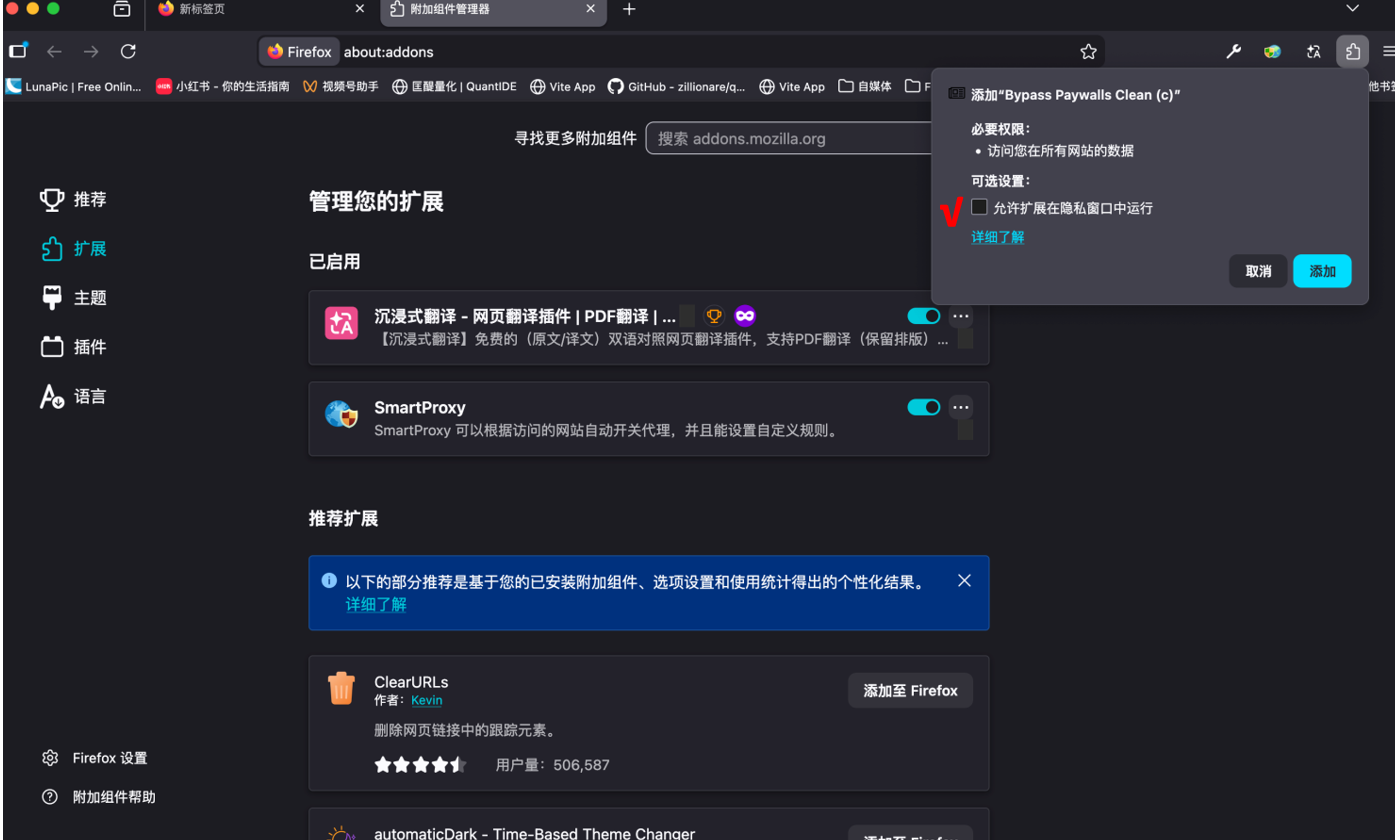
After installation, the BPC icon will appear in the browser extension bar. Click it to view the list of hundreds of supported websites.
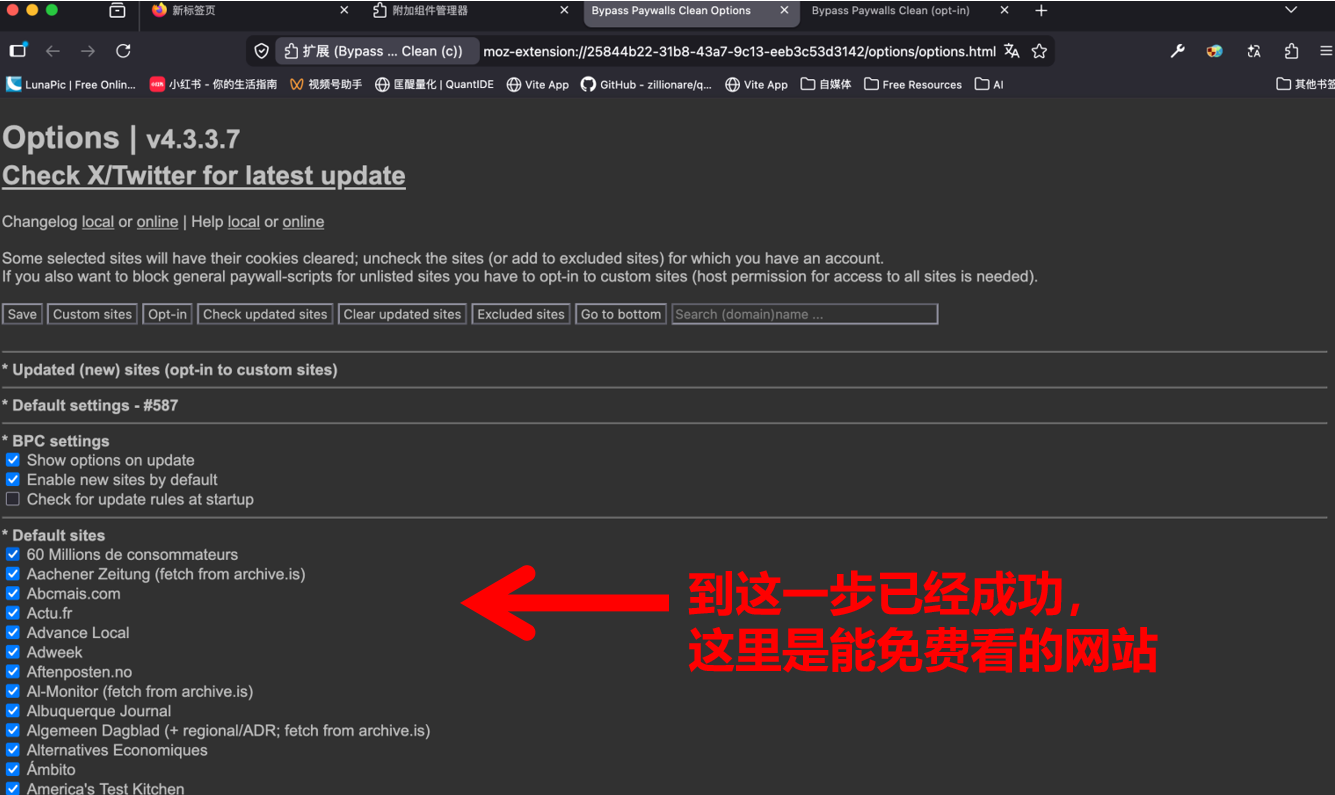
Step 3: Verify the Effect
Using a paid article from American Banker as an example:
Open the website in Safari and randomly select a paid article. After logging in, you will find that the latter half of the content is inaccessible.
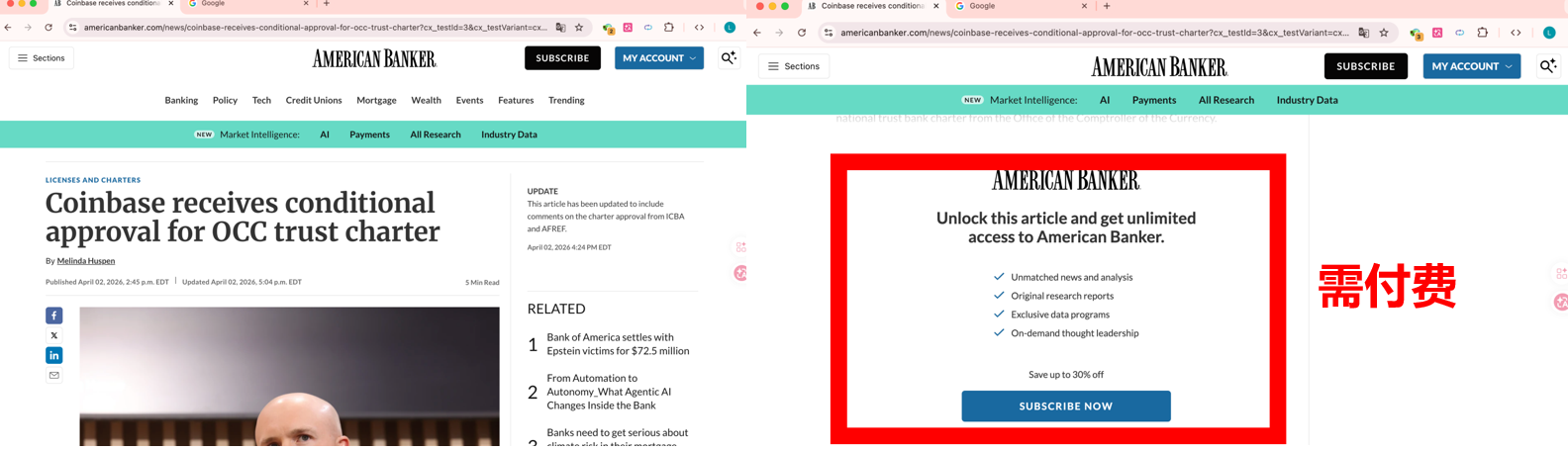
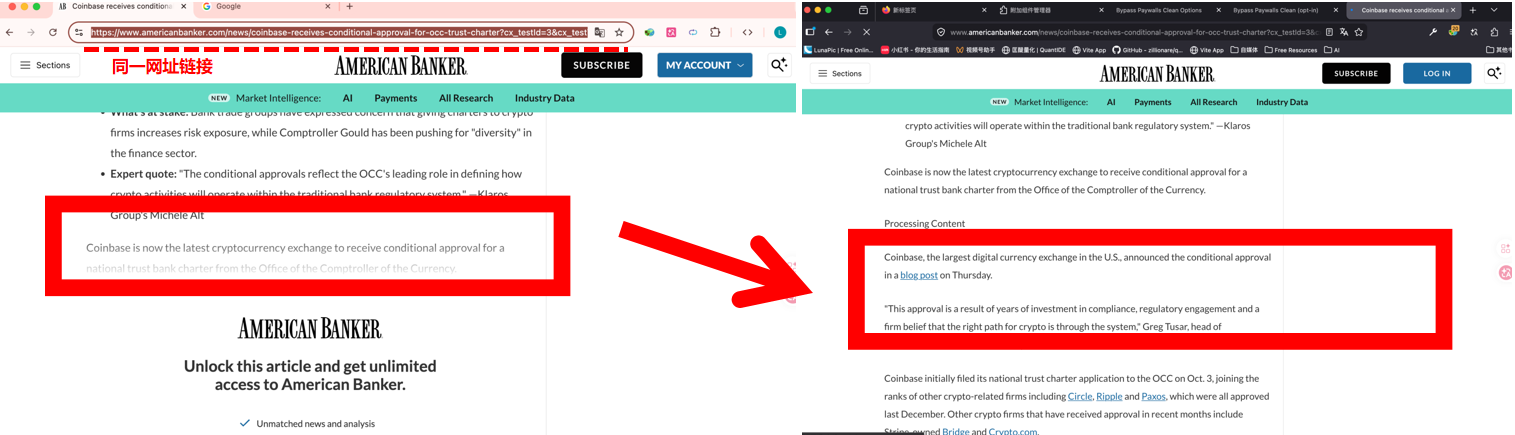
Copy the same article URL and open it in Firefox. You can directly view the paid content. Note: Some websites (such as Medium) require logging in first for the extension to work.
Other Notable Websites
This extension supports hundreds of websites. Here are some commonly used categories:
Financial & Business: American Banker / Investor's Business Daily / Investors' Chronicle / Citywire / Financial News / Börsen-Zeitung / De Tijd / L'Écho / Business Post.ie / Business Standard
Technology & Industry: Wired / MIT Technology Review / Ars Technica / Fast Company / TechCrunch / The Verge / Gizmodo
US Media: Forbes / Fortune / Bloomberg / CNBC / CNN / Axios / Fox News / Barron's / Business Insider
European Media: Der Spiegel / Die Zeit / Frankfurter Allgemeine Zeitung / Le Monde / Le Figaro / El País / The Guardian / Financial Times
Academic Research: Harvard Business Review / Foreign Affairs / The Atlantic / Nature / Science / National Geographic
Consumer Product Reviews: 60 Millions de consommateurs / Stiftung Warentest
Conclusion
This article covers two topics: the order of financial reading and free access points.
Without order, you see only fragmented information; without access points, the order is merely theoretical. First, build the reading framework, then use the extension to integrate the access points, so that information gradually沉淀 (precipitates) into a system.
If you find this framework useful and wish to further translate financial frameworks into actionable quantitative strategies, please explore our Quantitative 24-Course and Factor Mining & Machine Learning Strategy Course.