Max Dama: The Unconventional Path to HFT Mastery
In the quantitative trading circle, we’ve heard countless stories of "geniuses."
They usually follow a specific template: gold medalists in math Olympiads from a young age, undergraduates at Harvard or MIT, PhDs in theoretical physics, and immediately snapped up by top Wall Street hedge funds upon graduation.
But today, I want to tell a different, atypical story.
The protagonist lacks those glossy "genius" labels. He hails from a remote corner of Florida, self-deprecatingly calling himself a "redneck." Before high school, his main hobbies were surfing and daydreaming; he even felt he wasn't "smart enough." Yet, this seemingly ordinary teenager harbored a crazy idea in high school: using artificial intelligence for trading. During university, he single-handedly founded the renowned Berkeley Trading Club and authored a PDF guide that remains a "red book" (bible) for countless quantitative newcomers. Today, he is a core figure at Headlands Technologies, a top proprietary trading firm in Chicago.
His name is Max Dama.

The Awakened Surfer
The story begins in northwest Florida. Max Dama once joked in an interview that it’s Florida’s "redneck" region. In such an environment, educational resources are relatively scarce.
He has an older brother, a super-achiever who showed promise early on. But what about Max?
Feeling he couldn’t compete with his brother’s intellect, Max decided to focus on surfing, enjoying the sun and sand instead of grinding through textbooks. At that time, he was no different from many playful children, lacking major ambitions for the future, adopting a "chill" attitude.
However, the turning point came quickly. Because his brother was so outstanding, he was selected for Duke University’s Genius Youth Program and sent to McCallie School, a famous boarding school in Tennessee. I looked up some information about this school; according to 2017 data, 17% of its students went on to top institutions like Brown, Princeton, Harvard, and Stanford. It is an excellent all-boys boarding school.
The school reasoned: if his brother is this impressive, and they share the same parents, the younger brother must be good too. So, in a twist of irony, Max got in as part of a "buy one, get one free" deal.
This opportunistic entry completely changed Max’s life trajectory.
At McCallie, Max seemed to have his meridians unlocked. He suddenly realized he wasn’t unintelligent; he had just lacked the right study methods and interests.
Here, he encountered two things that fascinated him: artificial intelligence (AI) and financial trading.
It’s important to note that over a decade ago, AI was nowhere near as popular as it is today, and quantitative trading was a black box to most people. Yet, at that time, high schooler Max was already pondering: Can I write a program to let AI help me trade automatically? He even tried developing video games himself. This obsession with technology and logic planted the earliest seeds for his future path in quantitative finance.
The "Madman" and the "Red Book" at Berkeley
After high school, Max confidently applied to Stanford University and got rejected. This was a minor blow at the time. However, he quickly adjusted his mindset and ultimately attended the University of California, Berkeley.
Looking back now, this might have been the best arrangement. At Berkeley, Max Dama embarked on the most "crazy" and fulfilling period of his life.
How hardworking was Max in college? While most students felt pressured taking three or four courses per semester, Max took six or seven! And these weren’t easy electives; they were hardcore courses in machine learning, algorithms, applied mathematics, and even many graduate-level classes.
Max recalled in an interview that since graduate courses weren’t open to undergraduates, his method for auditing them was quite shameless. He went to professors every week asking: "Hey, did anyone drop the class this week? Is there a seat? Can I come in?"
Relying on this persistence, he squeezed into numerous advanced courses. He kept a constant thread in his mind: I must apply everything I learn to trading.
Different endpoints lead to vastly different perspectives on knowledge.
In linear algebra class, others saw matrix transformations; he saw portfolio optimization models.
In microeconomics, others memorized supply and demand curves; he pondered the microstructure of order books.
This extreme sense of purpose allowed him, within four years of university, not only to earn degrees but to earn four degrees! It is said that during graduation registration, the system only had two fields for degrees.
The staff were stunned, saying, "No one has ever earned four degrees. There’s no place to fill this in."
Max replied: "Just find a blank space and write it by hand."
Founding the Berkeley Trading Club
Beyond his intense studying, Max did something far-reaching at Berkeley.
At that time, although Berkeley had a strong academic atmosphere, the community vibe around quantitative trading was weak. Max felt too isolated, unable to find peers to discuss with. If no one is doing it, I’ll do it myself!
Thus, he founded the Berkeley Trading Club, personally designed the syllabus, taught classes to students, and did so for four semesters. To support teaching and share ideas, he also started a blog. During the "golden age" of blogging, Max’s blog quickly gained popularity. He unreservedly shared his strategy code, market insights, and even lessons from failures.
Here is an interesting anecdote. Because the blog became so popular, it brought unexpected opportunities alongside fame.
For instance, a Korean investment firm saw his blog, were amazed, and assumed he was some hidden master. They invited Max to fly to Korea to help them build a trading system. Max, still a college student, went eagerly. The result? He honestly admitted in an interview: "Actually, I didn’t really know what I was writing at the time. That system probably couldn’t be used. But I had a great time singing karaoke with that Korean boss."
Although the trip to Korea was a bit of a "fiasco," Max’s blog did accumulate substantial practical content. Before joining Headlands Technologies, compliance requirements forced him to shut down his personal blog. But he couldn’t bear to let this effort vanish. So, he spent time compiling the精华 (essence) of his blog articles, tutorials, and code into a 60-page PDF document titled 《Max Dama on Automated Trading》.
This PDF was later uploaded online. Its content was hardcore and practical for an era when information was rarely shared publicly. However, much of the material was written during his undergraduate years, so some information may be outdated and shouldn’t be taken as absolute truth today. Nevertheless, this material remains highly valuable for reference.
From Intern to Core Member at Headlands
Having covered his university glory, let’s look at Max’s career.
You might think that someone with four degrees and a campus celebrity status would have no trouble finding a job. In fact, that wasn’t the case. Max admits that upon graduation, he faced many rejections. He first interned at a hedge fund in San Francisco, led by Astro Teller, who later became famous as the head of Google X. While that experience broadened his horizons, the fund itself didn’t make much money. After graduation, he sent out many resumes and faced many rejections. Eventually, through networking within the industry, he connected with Headlands Technologies.
Headlands may not be as famous as Citadel or Jane Street, but it is highly respected within the high-frequency trading (HFT) community. Here, Max found his stage. In interviews, Max revealed many valuable details about the internal operations of this mysterious company.
First, the vertically integrated work model. In many large funds, division of labor is extremely fine-grained. Some people specialize in data cleaning, others in writing low-level C++, and others in strategy research. You might just be a cog in the machine. But at Headlands, Max says: "You are responsible for the entire vertical domain." This means if you are responsible for trading in a specific market, you must not only write strategy models but also execution code, manage data cleaning, and even monitor live trading operations.
Max says: This is exhausting, but the feedback is extremely fast. You know exactly how every line of code impacts your P&L. If you lose money, you can’t blame the data team for bad data or the execution team for slow systems, because you wrote everything yourself.
Second, extreme transparency and "flatness." Max says Headlands is very transparent internally. Everyone can see everyone else’s codebase, and everyone can see the company’s real-time P&L. There is no such thing as "this is my secret strategy, I won’t show it to you." This culture forces everyone to learn from each other and continuously improve, because if your code is bad, everyone can see it.
In the interview, Max clarified a misconception. Many people think HFT is about betting on direction, guessing whether the price will go up or down in the next second.
Max says that in reality, they mostly engage in market making and arbitrage, pursuing market neutrality, earning money by providing liquidity or correcting minor market inefficiencies.
Max used a word to describe HFT: Clear. In long-term investing, you buy a stock and might wait a year to know if you were right. But in HFT, you push your code online, and within milliseconds, you know whether you were right or wrong. This extremely short feedback loop is what makes HFT most fascinating and most brutal.
Why Max Dama Believes LLMs Are Useless for HFT
In today’s era of AI boom, everyone is wondering how to use ChatGPT for stock trading, but Max directly poured cold water on this idea. He believes that large language models (LLMs) are mainly useful as coding assistants or for parsing news text, but they are useless for core trading logic.
Because HFT is a nanosecond-level game, your model must make decisions within microseconds. An LLM, a massive neural network, might take hundreds of milliseconds or even seconds to infer a response—by then, the opportunity is long gone. Moreover, HFT deals with structured market data, not natural language.
In this domain, simple linear models or lightweight tree models are often more effective and controllable than complex deep learning architectures.
Max’s Views on Young Quant Recruits Today
He says: Students have changed.
In his era, people entered this industry mostly out of curiosity about the market, viewing it as a challenging intellectual game. Now? Many students see the high salaries of quantitative traders and flock to the field. They frantically grind problems, practice brain teasers, and treat interviews as exams to pass. Max calls this phenomenon a negative indicator.
Because, in his view, if you are only here for the money, it’s hard to survive in the brutal market. True top-tier traders are often addicted to solving problems themselves. They enjoy the thrill of博弈 (game/struggle) with the market and finding patterns in chaos, not just the growth of numbers in their bank accounts.
The Inspiration from Max Dama
Looking back at Max Dama’s life philosophy, his father had hoped he would become an AI researcher, given that it was the future direction.
Max laughs: "You know, kids never listen to their dads."
So, he unhesitatingly chose trading.
Although AI is indeed the hottest trend now, Max has carved out his own path in the trading field. Max Dama’s story is not just about a scholar making money; it is a story about extreme dedication and selfless sharing. He proved through action that even in an industry filled with trade secrets and zero-sum games, openness and transparency can earn you respect and even make you stronger.
If you are interested in quantitative trading or are feeling lost, I strongly recommend searching for that book, Max Dama on Automated Trading. Even if you don’t understand the code inside, just reading his preface and observing how he thinks, I believe you will gain something.
Well, that’s the story of Max Dama for today. I hope this surfer’s counterattack journey brings you a little inspiration.
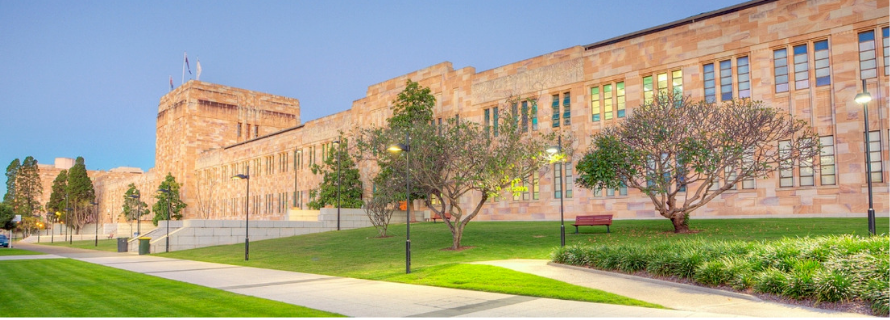
For several consecutive episodes, our cover images have been university campus photos, provided free of use by Wikimedia. We also need a place to thank the photographers and state copyright. So, let’s simply play a "guess the campus" game.
Which university is featured in this episode’s cover image? Do you or your friends study at this beautiful university? Tell us in the comments.