
Smart Money Concepts: A Price Action Strategy for Quant Traders?
abstract
- **What is Smart Money Concepts (SMC) Trading Strategy?** - **Key SMC Concepts** - **How to Trade Using Smart Money Concepts** - **Difference Between SMC and Price Action** - **Is SMC a Good or Bad Trading Method?**In the China A-shares market, there was a period when northbound capital was referred to as "smart money." It was so influential that intraday inflow data became a critical indicator. Eventually, regulators halted the real-time disclosure of northbound capital flows.
However, beyond northbound capital, "smart money" is a broader term for institutional funds—a concept present in nearly all global markets.
The Smart Money Concepts (SMC) strategy has gained viral attention in recent years, largely for valid reasons: it appears to work. At least for some traders. But what, exactly, makes this SMC approach unique?
SMC is not a single strategy. It is more of a theory or philosophy.
What is Smart Money Concepts in Trading?
Smart money represents supply, demand, and market structure. Market makers or "smart money" typically leave footprints of their trading decisions on charts, and SMC traders aim to follow these footprints.
Retail traders often assume financial markets—especially forex—are fair places to make money, but SMC suggests otherwise. The theory posits that:
Market Maker Manipulation
It is alleged that market makers, such as banks, hedge funds, and other well-known participants capable of mobilizing large capital, can manipulate markets against retail traders. While this may sound like a conspiracy theory, it warrants serious investigation.
These institutions operate for profit or to meet the needs of a nation or large corporation. They do not hesitate to leverage their vast resources and market knowledge to gain an advantage, including setting traps for retail traders to extract their capital.
Retail Traders’ Reaction
Retail traders are often unaware of these activities, making them vulnerable to the market’s unpredictable fluctuations.
However, this is not the entirety of the SMC philosophy. Often, these large players enter the market with good intentions. For example, a government that must purchase large quantities of commodities (such as wheat, soybeans, or crude oil) will inevitably push prices in a specific direction.
Therefore, according to SMC theory, financial markets are largely controlled by financial institutions, hedge funds, and governments. They have a significant impact on price trends, so retail traders must be vigilant about their intentions to predict market movements.
In short, this is the essence of SMC. If you believe in smart money concepts trading, then as an individual trader, you should follow the smart money.
Key SMC Concepts
SMC is not just a theory; it is a complete trading methodology with its own unique terminology and concepts. Let’s examine some of SMC’s concepts and trading techniques closely.
1. Order Blocks (OB)
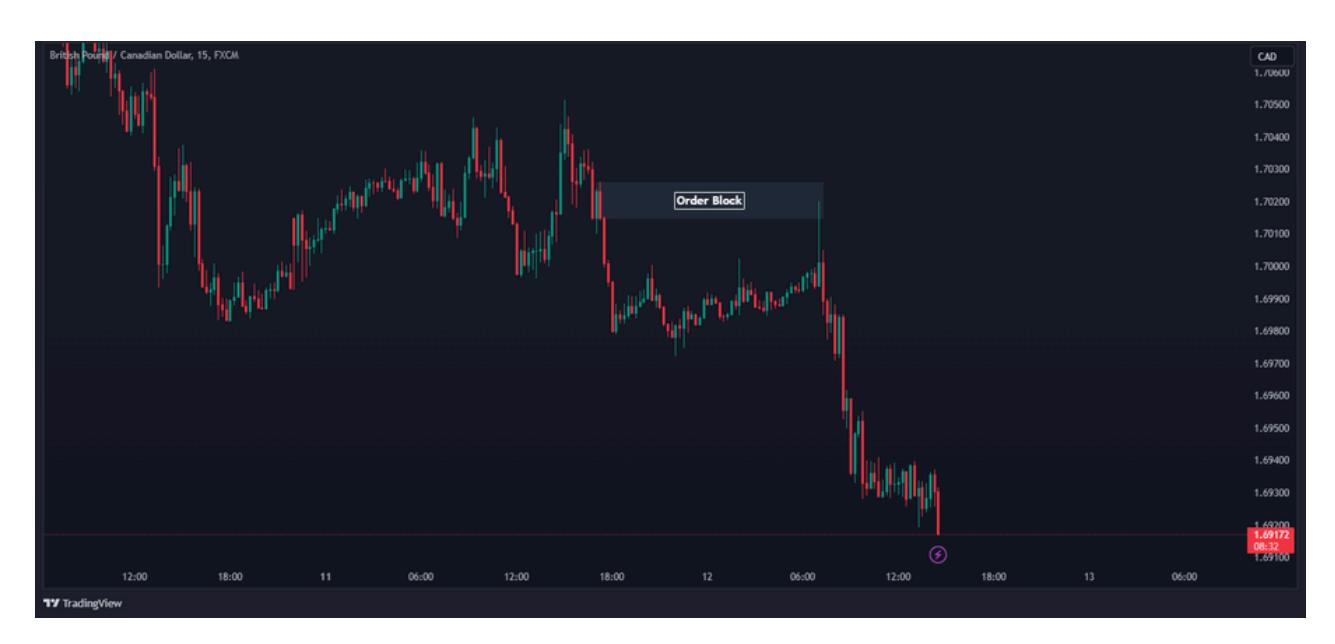
This concept is fundamental to understanding SMC. Essentially, an order block refers to a market condition where central banks, governments, and large financial institutions accumulate or distribute significant assets through a series of large orders. They do this to purchase assets without causing market panic and high volatility.
On price charts, order blocks typically appear as periods of consolidation (as shown in the figure below). However, to correctly identify order blocks in the market, you must use other tools, such as Level 2 data and volume indicators.
2. Breaker Blocks (BB)
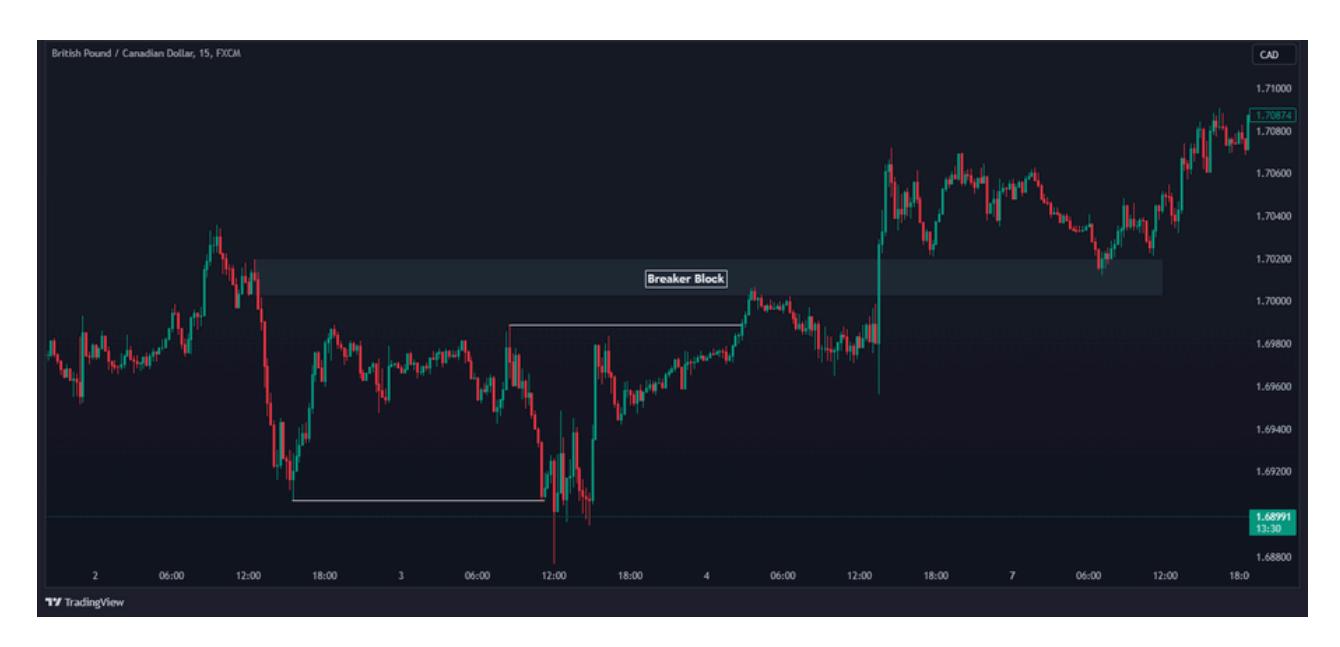
These are order blocks that failed to hold a price level within a given trend. They represent price levels where market makers intentionally break support or resistance to trigger retail traders’ stop-loss orders.
3. Fair Value Gaps (FVG)
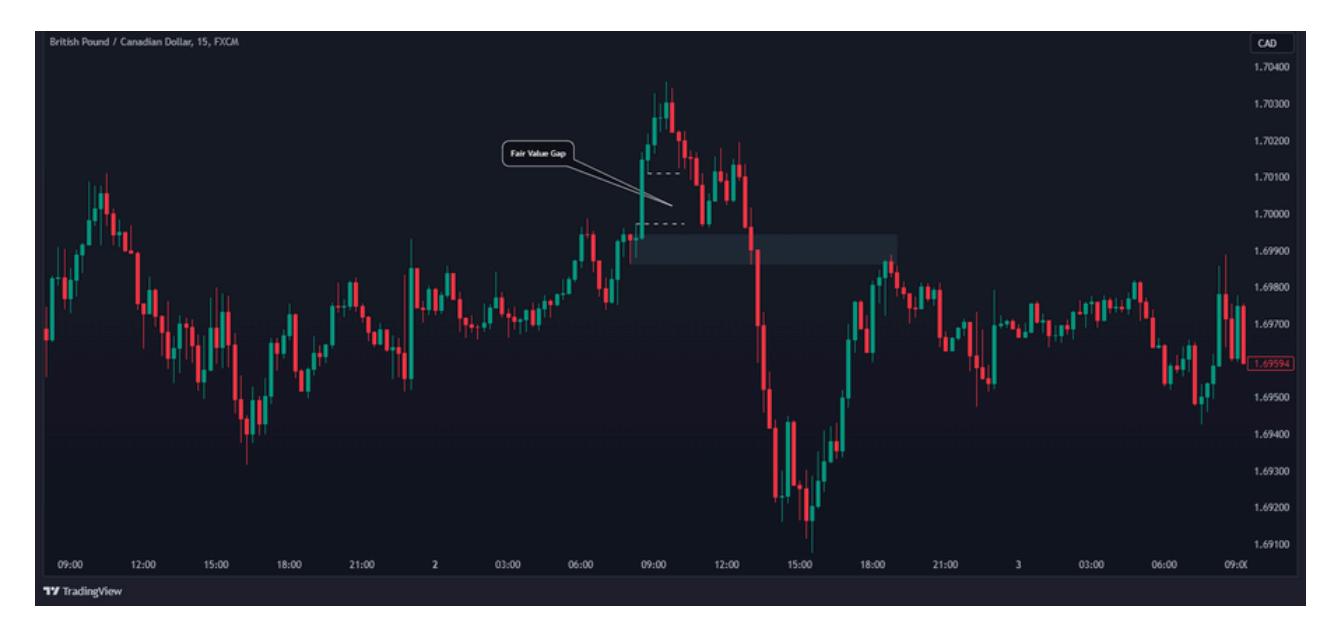
Fair Value Gaps, or FVGs, are a unique trading concept that appears when the market moves rapidly from one price level to another, often leaving a gap on the price chart. SMC traders closely monitor these gaps because they can indicate significant shifts in market sentiment.
4. Break of Structure (BOS)
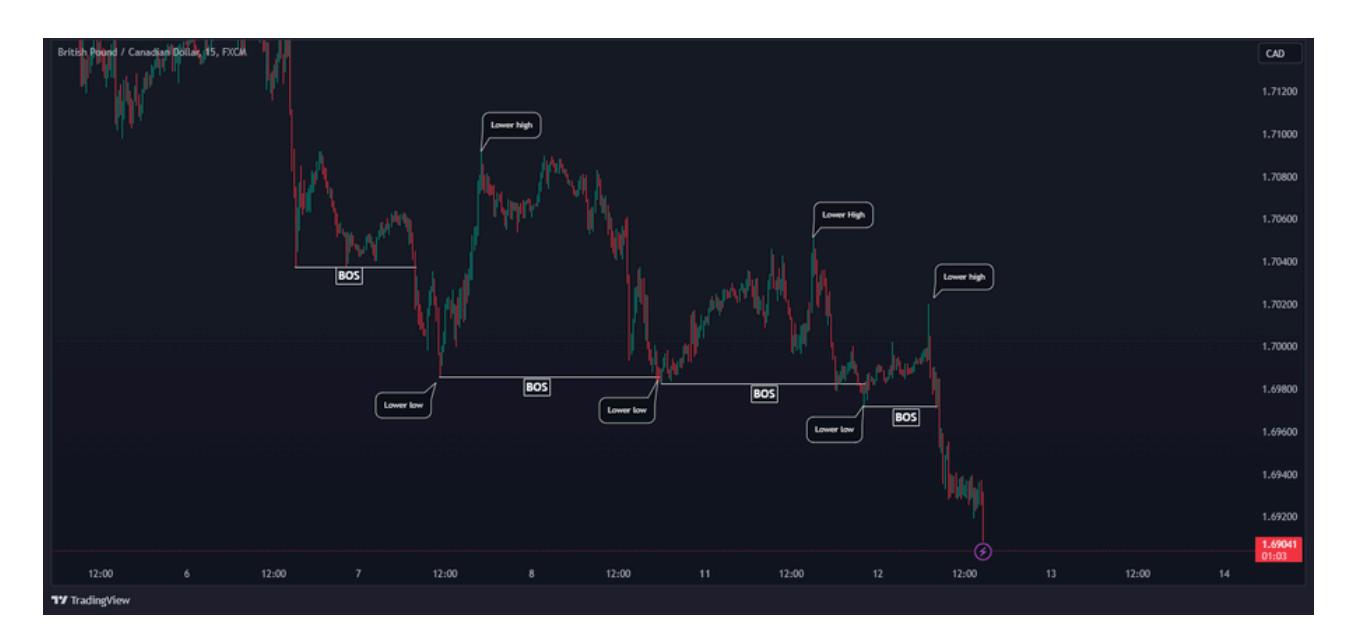
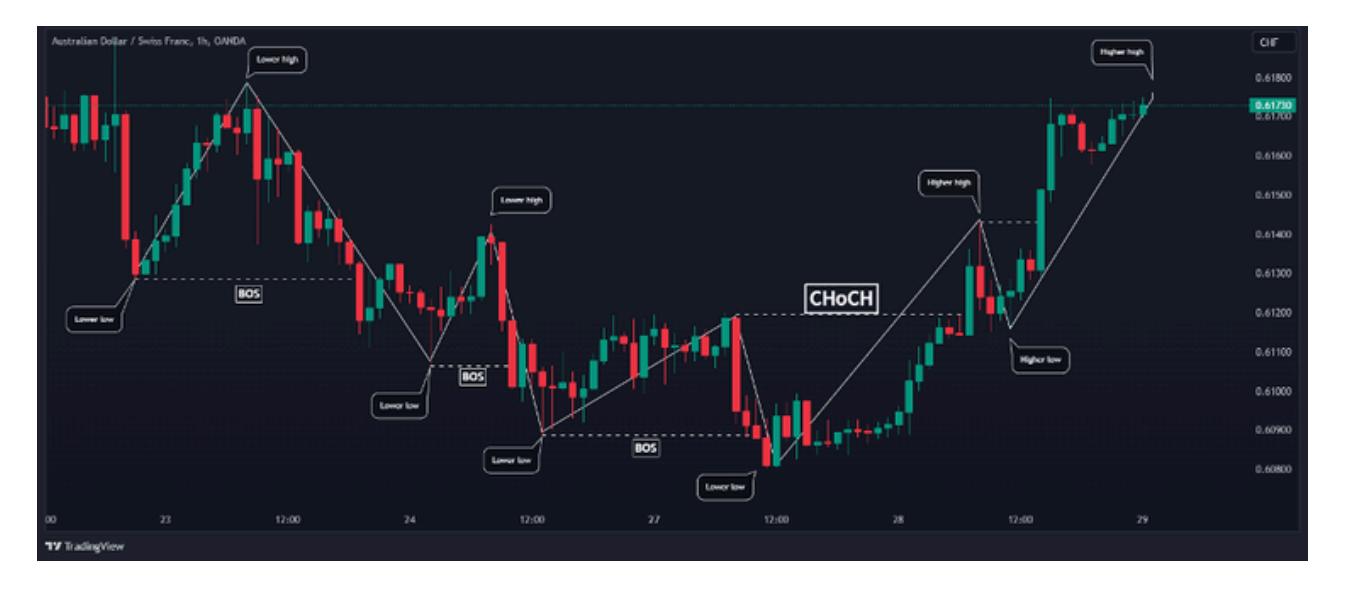
Break of Structure is a concept focused on identifying changes in the overall market trend. A BOS occurs when price makes a new high or low, breaking through previous highs or lows.
5. Change of Character (Choch)
Change of Character, often abbreviated as Choch, refers to a sudden shift in market behavior. It is an abrupt change in volatility, volume, or price action, indicating that the current trend is weakening and a reversal may be imminent.
6. Liquidity
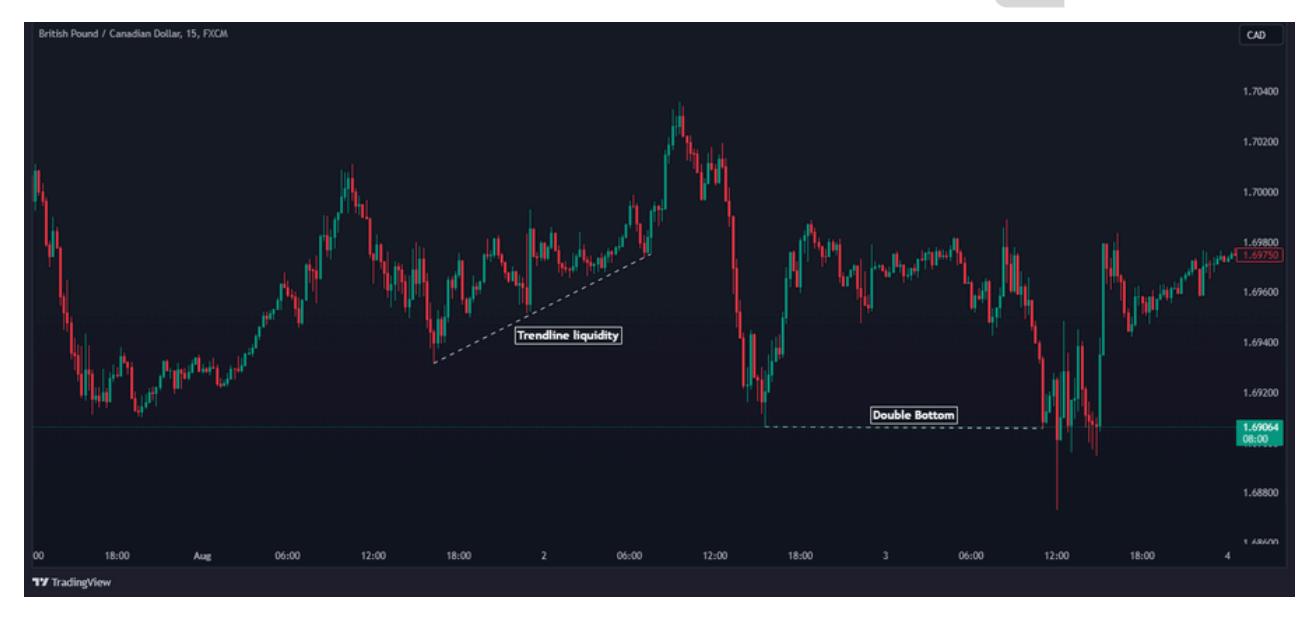
Liquidity is a key factor in SMC trading. It refers to specific price levels where orders are placed above or below, waiting to be collected. There are different types of liquidity, such as trendline liquidity, buy-side liquidity, sell-side liquidity, double tops, and double bottoms.
How to Trade Using Smart Money Concepts
There are various approaches to trading the Smart Money Concepts strategy. While some professional traders may obsess over complex methods, here is a more direct yet effective SMC trading approach:
Step 1: Identify the Trend
The first thing you need to do when trading SMC is to determine the primary trend. In SMC trading, identifying the trend is based on a deep understanding of market structure. If this analysis is done correctly, we typically find ourselves on the right side of the market for a trade.
As mentioned, when price breaks down structure, forming a series of lower highs and lower lows, we are in a downtrend. Conversely, a series of higher highs and higher lows indicates an uptrend. Similarly, a Change of Character (Choch) signals a change in trend.
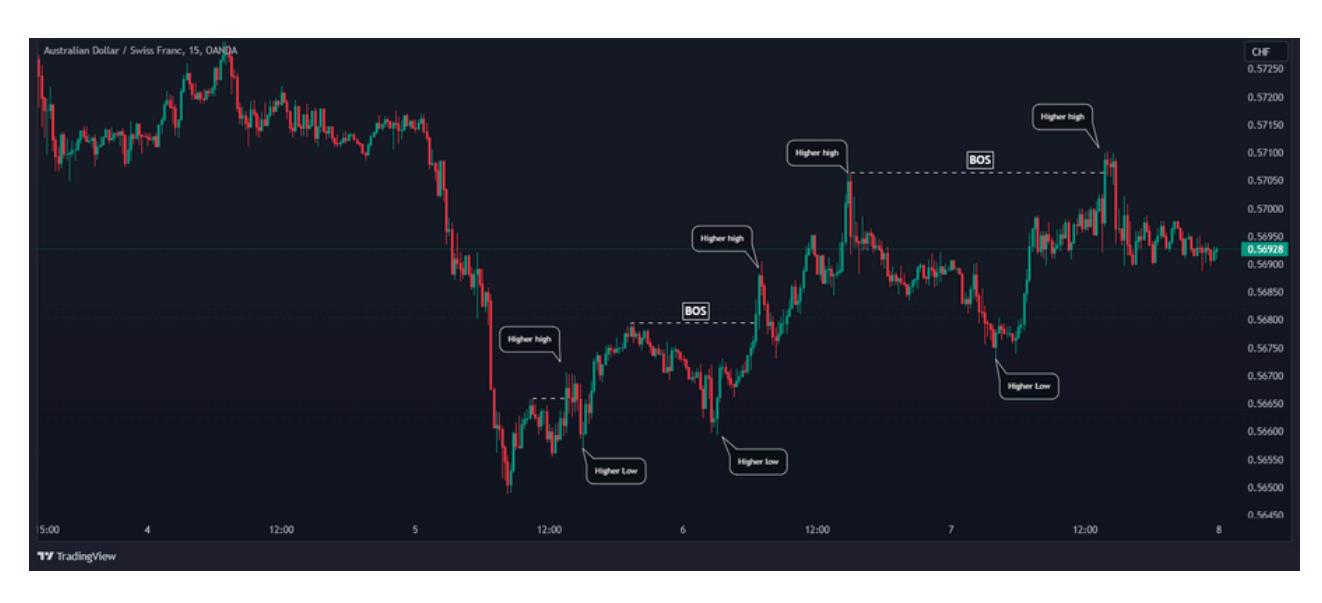
The chart above shows that after a Choch, the trend has shifted from bearish to bullish. This means we are no longer seeking to sell the currency pair. Instead, when our entry criteria appear on the chart, we look to buy.
Step 2: Identify High-Probability Order Blocks
After determining the trend, we focus only on identifying where market makers are prepared to execute their orders and trade in that direction. This is where determining the optimal order block becomes crucial.
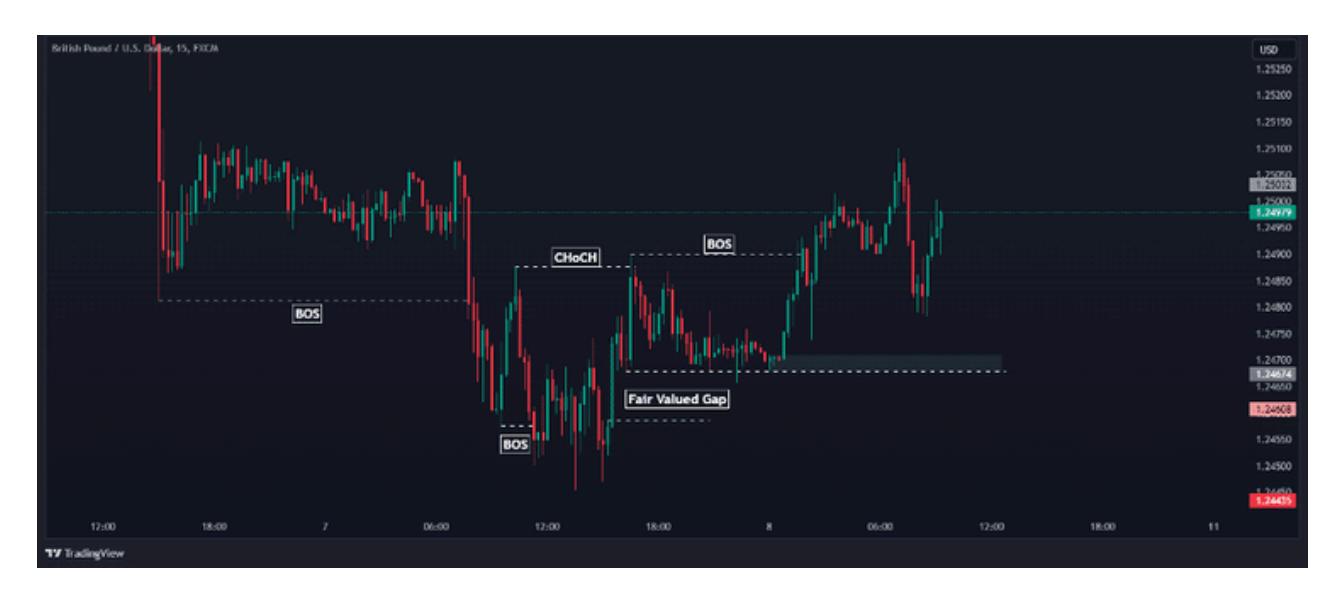
In our example, we can see that sell-side liquidity was established below the first order block. Although it broke up through market structure, there is also a Fair Value Gap directly below the supply/demand zone. We expect market makers to take this liquidity before continuing the uptrend.
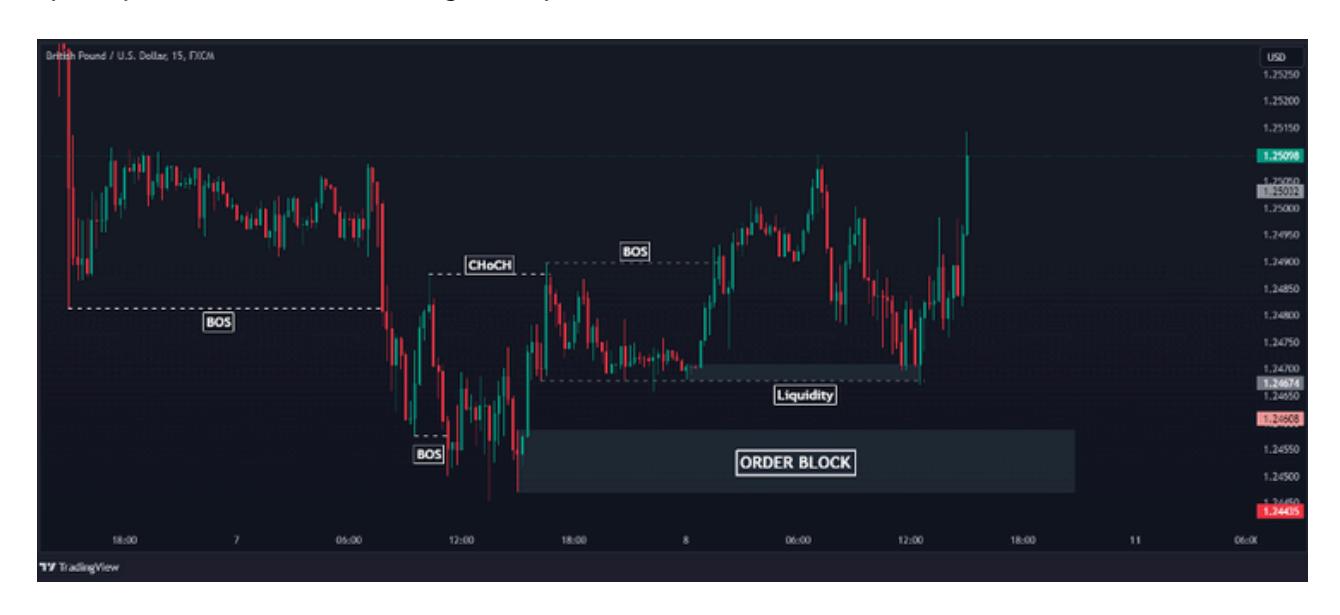
The order zone below the liquidity is our high-probability bullish order block for several reasons: it triggered an upward CHoCH, and there is liquidity and a Fair Value Gap directly above it. We expect price to return to this zone and continue the uptrend.
Step 3: Determine Your Entry and Exit Points
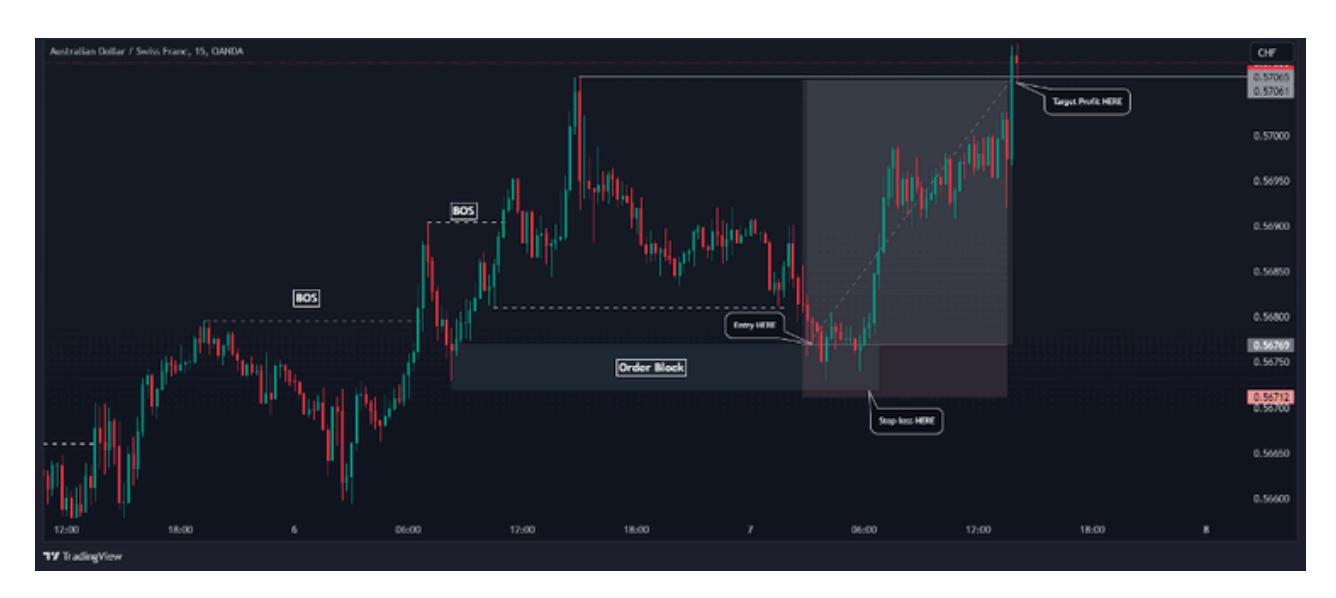
Next, you must determine the area where large players enter the market. After detecting valuable supply or demand zones, determining entry and exit points becomes easier. For our example, we will set the entry point just above the bullish order block, the stop-loss just below that zone, and the profit target at the structural high.
Smart Money Concepts vs. Price Action—What’s the Difference?
We have established that the Smart Money Concepts strategy is built on a solid price action methodology. In fact, SMC and price action trading share many similarities. Some might even claim they are the same. However, they differ in the following aspects:
1. Interpretation of Market Dynamics
Most importantly, each method aims to interpret market dynamics differently. Price action traders are primarily technical traders who seek to identify trends, reversals, and trading patterns that predict potential price movements. They may care less about why these movements occur, as long as they can make accurate predictions based on historical price data. They look at charts and rely on charts. Most of the time, they do not attempt to understand why an asset moves in a specific direction.
On the other hand, SMC traders are deeply interested in the underlying forces driving price movements. They seek to understand market makers’ intentions and how supply and demand dynamics affect prices. The core idea of SMC theory is that SMC traders do not just look at charts; they attempt to determine where the smart money is going. This is the primary goal of the SMC strategy—following the money.
2. Market Analysis Approach
Price action traders primarily rely on technical analysis tools, including candlestick patterns, indicators, and support/resistance levels, to make trading decisions. They closely monitor how prices move and use historical price data to identify potential trading setups.
Meanwhile, SMC traders go beyond price patterns. They analyze order blocks and breaker blocks to gauge institutional participants’ intentions. SMC traders care more about why prices move the way they do, which often involves understanding market maker activity.
3. Terminology
Price action trading relies on a relatively simple set of terms and concepts, making it accessible to traders at all levels. It involves terms such as doji, hammer, double top, or Non-Farm Payrolls—all widely recognized in the trading community. SMC introduces unique vocabulary, including "liquidity grabs" and "mitigation blocks." These terms may sound unfamiliar to traders not versed in the SMC strategy.
Is SMC a Good or Bad Trading Method?
Overall, opinions on the effectiveness of Smart Money Concepts (SMC) are sharply divided. Some traders are deeply convinced by it, while others remain skeptical. However, here is all the information you need to decide which side to stand on:
Advantages
- SMC appears to work for some traders: Smart Money Concepts has proven to be a valuable tool for many traders. It offers a unique perspective on market dynamics, helping traders make informed decisions. Those who have succeeded with SMC believe that if it works for them, there is no reason not to use it. They appreciate its focus on understanding institutional participants’ intentions and believe it enhances their trading acumen.
- SMC as repackaged price action: One argument in favor of SMC is that it repackages price action trading, which has a long history of producing positive results. Price action analysis of price trends and patterns, without relying on Smart Money Concepts, has been accepted by traders across various assets, including currencies, stocks, and commodities. Since SMC is built on these core price action principles, supporters view it as a strategy with a solid foundation aimed at improving price action trading methods.
Enhanced Understanding via SMC: Some traders find that SMC provides a clearer, more structured way to understand price action and market dynamics. The unique terminology used in SMC can simplify complex concepts for those who align with this approach. It offers traders a new perspective and a new lens through which to view the market.
Disadvantages
- Lack of concrete evidence: Critics of Smart Money Concepts raise valid concerns about its effectiveness as a trading strategy. While SMC traders assert that "smart money" players’ market manipulation is the cause of certain SMC patterns, there is a noticeable lack of specific evidence to support these claims. Skeptics argue that accepting SMC as a reliable strategy is challenging without verifiable evidence of such manipulation.
- The importance of retail trader liquidity: Another point of contention revolves around the role of retail traders in the market. SMC suggests that "smart money" chases the liquidity provided by retail traders. However, skeptics argue that the liquidity contributed by retail traders is relatively insignificant in the grand scheme of things. Alleged manipulative market makers have access to vast capital, so they are unlikely to target small retail traders.
- Complex terminology for beginners: The unique terminology used in SMC can be overwhelming for newcomers to the trading industry. Skeptics argue that simpler terminology would make forex trading strategies more accessible to a broader audience and reduce confusion among new traders.
Overall, regardless of whether you agree with the Smart Money Concepts theory, one thing is clear: the strategy is effective. At least for some traders.
Although learning this concept may seem challenging for new traders, understanding the Smart Money theory can create the right context, thereby shortening the learning curve. This is especially true if you subscribe to the notion that large financial institutions, governments, and central banks are the ones controlling the market.