
Tulip Mania: The Birth of Options Trading
How the Crazy Tulip Trade Launched the Earliest Options Trading
Speculation is human nature and an eternal topic in finance. The temptation to gamble—turning a bicycle into a motorcycle—is irresistible to many. Our series, Blooming Flowers Once Toppled a Nation: A 300-Year History of Quantitative Finance, begins with the first recorded instance of speculative frenzy in human history.
This series primarily follows the narrative of Pricing the Future: The Quantitative Finance History That Shook Wall Street, while also drawing insights from other popular bestsellers in the field. This is the most extensive series of e-books I have read in the past year. A list of referenced books can be found at the end of this article.
The Crazy Tulip
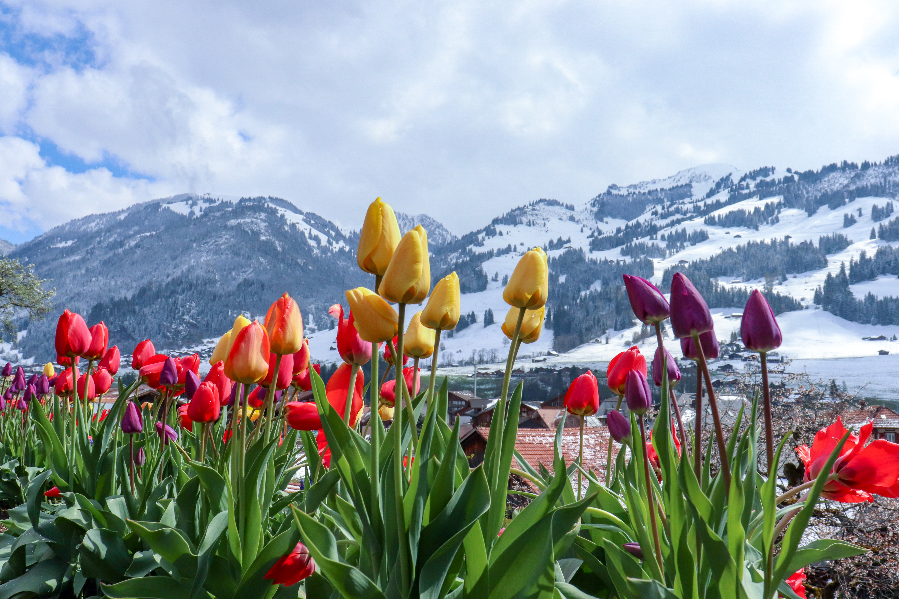
In the 1630s, the Netherlands was a prosperous nation, leading Europe in economic power. With wealth came investment opportunities, and the Dutch discovered that tulips could serve as tools for displaying status and flaunting wealth.
Tulips are said to have originated in the Tianshan Mountains. After the expansion of the Ottoman Turkish Empire, they discovered the flower and began cultivating it. Artificially cultivated varieties later became infected with a virus, causing a mottled disease that made the flowers even more enchanting and vibrant.
To express their fondness for these plants, the Dutch used military ranks to categorize different varieties. The most prestigious variety, "Semper Augustus," was named for its purple streaks, which conveyed imperial dignity. The next tier was "Governor," followed by "Marshal" and "General."
{: .img-center-75}
Speculators traded tulip seeds—specifically, the bulbs. The most expensive variety, Semper Augustus, commanded a price equivalent to a property covering 500,000 square meters (slightly larger than the Forbidden City), or the value of eight fat pigs, four fat oxen, two tons of butter, 1,000 pounds of cheese, one silver cup, a set of clothes, a bed, and a boat.
Once, a sailor returning from a long voyage, unaware of the tulip fever, mistook a Semper Augustus bulb for an onion and fried it with fish. The owner discovered this, and the sailor was imprisoned for several months.
The farce reached its peak in late 1637. By February 3 of that year, rumors spread suddenly at the Haarlem flower exchange that no more buyers (bag holders) would appear.
Some sober speculators began to realize that no matter how alluring, a beautiful tulip is just a flower. The myth finally shattered.
When the music stopped and speculators were forced to exit the market, they found that their expected substantial returns vanished instantly, replaced by massive financial losses and the risk of unbearable financial distress and bankruptcy.
The entire nation suffered from the aftereffects of the tulip mania. National commerce was severely impacted, and it took many years for the economy to recover.
However, humanity did not learn any lessons from this speculation. As Hegel famously said: "The only lesson humanity learns from history is that it never learns from history." A similar floral speculation occurred in China in the 1980s, with the subject being the clivia flower.
The Origins of Options Trading
Yet, amidst this speculation, futures and options trading emerged, which proved to be profoundly significant for the development of financial markets.
Tulip bulbs must be planted in late summer and bloom in April or May of the following year, with a flowering period of one to two weeks. Subsequently, the original bulb disappears, and new bulbs grow, sometimes producing new shoots.
Tulip bulbs can be dug up in early June but must be replanted in September. Therefore, spot trading of tulip seeds could only occur during the four summer months, but capital was unwilling to rest for the remaining eight months.
 {: .img-center-75}
During this period, buyers and sellers reached agreements to deliver tulip bulbs in the summer. These agreements specified the variety, quantity (or weight), price, delivery date, and payment date. Such pre-arranged transactions executed in the future are known as futures contracts.
By February 3, 1637, the bubble burst, and buyers refused to fulfill their contracts. Disputes quickly spread from a few to everyone, leaving many in despair and anger.
Sellers sought judicial relief, but the courts refused to intervene. Ultimately, the Dutch Flower Merchants' Association proposed a solution: buyers who had entered into contracts between November 30, 1636, and the spring of 1637 could be exempted from their purchase obligations by paying a fee (then called a penalty) to the sellers.
Thus, buyers, who initially had an obligation to purchase bulbs according to the contract, now had another option. If the bulb price on the delivery date fell below the contract price, buyers could exit the trade by paying a relatively small premium to the sellers.
In this way, traditional forward agreements (i.e., futures contracts) evolved into what are known as options contracts. The Dutch Parliament promptly approved this proposal, enacting it into law. This was effectively the world's earliest legislation regarding options, paving the way for over 300 years of options trading and subsequent quantitative finance.
 {: .img-center-75}
Options are a great invention. They provide stable price expectations for both supply and demand sides, enabling production enterprises to formulate effective production plans.
Consider a farmer who needs to purchase fertilizer in six months. He is unwilling to buy now because storing fertilizer requires warehouse facilities, and the fertilizer may volatilize, causing waste and danger.
However, fertilizer prices are volatile. If everyone waits six months to buy, prices may rise significantly. On the other hand, fertilizer manufacturers are unwilling to produce large quantities without continuous orders, as this would lead to inventory buildup. Controlling production, in turn, would exacerbate supply-demand tensions six months later.
Thus, an intermediary appeared. He guaranteed the farmer: "For a fixed upfront fee (premium), I will sell you 300 pounds of fertilizer at $0.60 per pound in six months, regardless of the actual market price at that time."
The farmer agreed, and they reached a contract. Six months later, the fertilizer price dropped to $0.50 per pound. The farmer chose not to exercise the contract, instead buying fertilizer on the open market at a lower price, while the intermediary kept his commission.
In this example, options played a role in regulating production and smoothing volatility, enabling production and consumption to proceed in a continuous, predictable manner. While options are indeed a speculative tool, we should not forget their original purpose.
 {: .img-center-75}
Once options trading was born, a question arose: How should the premium paid by the farmer to the intermediary be priced?
This seemingly simple question went unanswered scientifically for centuries. It was not until 1973 that a formula comparable to Newton's laws of motion was discovered, providing a perfect answer. Who revealed this secret, and what honor will they receive? We will answer these questions in subsequent articles.
This series of articles references the e-book resources of the following books:
- Principles: Life and Work by Ray Dalio, Bridgewater Associates
- Inside the Black Box: A Simple Guide to Quantitative and High Frequency Trading
- The Man Who Solved the Market: How Jim Simons Launched the Quant Revolution
- The Quants: How a New Breed of Math Whizzes Conquered Wall Street and Nearly Destroyed It
- Flash Boys: A Wall Street Revolt
- Liar's Poker
- The Big Short
These books are written vividly and engagingly. If you are not accustomed to reading e-books, you may consider purchasing the printed versions.
If you enjoy the book Pricing the Future: The Quantitative Finance History That Shook Wall Street, you can purchase it by clicking here.
 {: .img-center-50}